Showing posts with label representative democracy. Show all posts

Wednesday, May 11, 2022

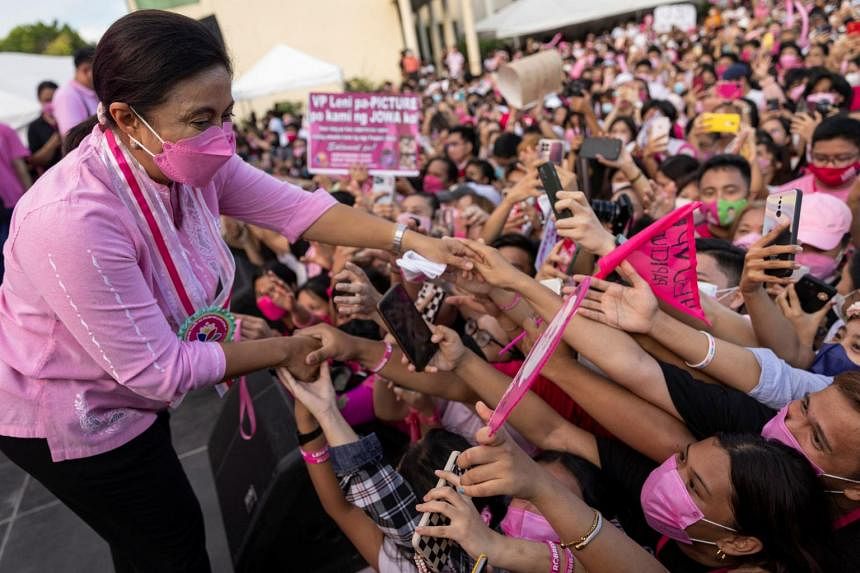
Salamat, Ma'am VP Leni Robredo, for your pioneering effort


Photo from The Straits Times

Ma'am VP Leni Robredo, thank you for introducing three concepts new to Philippine politics when you brought them out as the leading items in your political platform during your presidential candidacy campaign: open governmentparticipatory democracy, and a job guarantee policy.

It may not yet be the time for the Filipino people to have them, but you will be remembered as the only presidential candidate in Philippine history (perhaps in contemporary world history) to have had the will to advocate them and become so popular with the people with your introduction of them.

May the next presidential candidate to advocate for them finally succeed after your pioneering effort. [S / -I]


Diagram by Roberto TriviƱo uploaded to ResearchGate


Monday, February 26, 2018

Anti-Semiotic, Ang Putik


(borrowed from httpbellyngot1.wordpress.com)

LAHAT ng bagay sa mundo ay may meaning. Kahit nga ang pambansang almusal nating pan de sal na imported mula China at Turkey ang ginagamit na arina ay isang maliit na bagay lang na may malaking meaning. Ang EdloSA pa kaya, na may kilokilometrong trapik na ngayon ay may problemang ayaw solusyunan (dahil malaki ang kinikita ng oil companies sa trapik na ito) . . . kahit pa nag-rebolusyon na sa abenidang ito ang maraming ordinaryong tao noong 1986! Diyan pa lang, may malaking meaning ka nang makikita! Kaya kung sasabihin mo sa akin na wala nang meaning ang EdloSA 1, isa kang nagbubulagbulagan sa katotohanan ng mga bagay-bagay tulad ng pan de sal. O baka naman iniiwasan mo lang ang totoo: na hinayjak ng elite, tulad ng idolo mong elite o royalty, ang naibalik na “demokrasya”. Hinayjak nila ito para hindi na ito maging mas demokratiko pa, maging sa participatory man o semi-direct na democratic direction. Di ba? Aminin. Pati ba naman ang mga meaning ay hahayjakin mo rin, tarantadong hayjaker ka. [S / -I]


Friday, January 20, 2017

Isang Maiksing Reminder Tungkol sa Anatomiya ng Pilipinong Botante at ang Ugat ng Abuse of Power sa Ating Bansa


ANO ang mali sa pronouncement na ito?
    
"Jojo, di ba ibinoto mo rin si Duterte? Tapos wala pa yatang isang buwan ay kung anu-ano na ang pinagsasasabi mo tungkol sa Duterte government na binoto mo? Kung gago nga ang Duterte government, ayon sa punto ng ilang kritisismo mo laban dito, aba, isa ka rin sa mga dahilan kung bakit ganito ang nangyari sa bansa natin under the Duterte government. Kaya ang masasabi ko sa iyo ay ito: dun ka na lang sa binoto mo, gago ka! Panindigan mo na lang, punyeta ka!! Di ka namin kailangan sa panig namin!!!"
    Obvious naman na ang nagsulat nito ay hindi bumoto o nangampanya kay Duterte. Dahil ang bumoto kay Duterte ay ganito ang isusumbat:
    "Ang problema sa atin, boboto tayo, tapos sa huli tayo ay magrereklamo. Ganun ba parati? Di ba dapat suportahan na lang kung sino man ang nanalo dahil yun ang pinili ng tao? O totoo nga bang mahilig lang talaga tayong maging parating opositor? Kaya siguro hindi umuunlad ang ating bayan."
    Hokey. 
At ngayon, ang sagot ko sa mga mungkahi na yan, na ilalatag ko ng mahaba at ng ganito:
    
"Ser, ma'am, ang pagkakaalam ko po, lahat po tayo ay nalalagay sa single-issue activism o single-issue politics tuwing eleksyon. At least sa case ko ganun ang tingin ko sa sarili ko bilang botante. Ibig sabihin, binoboto ko ang tao na nagmumungkahi na gagawa ng solusyon sa single issue na nasa tuktok ng aking listahan. Oo nga't marami tayong nasa ating mga listahan na di angkop sa kandidatong iboboto natin at maaaring angkop dun sa kabila, kaya lang hindi iyon ang nasa tuktok sa listahan natin, at kahit man marami tayong magkakaparehong causa sa ating mga listahan ay magkakaiba tayo ng piniling issue na ilalagay sa tuktok ng ating kani-kaniyang listahan. At dahil alam ko iyan, ser, ma'am, nung ako'y bumoto, pinangako ko sa aking sarili na hindi ako magiging loyalista ng sinumang pulitiko at ng kanyang mga pagpangako kundi ng pagtupad sa mga issues sa aking listahan. Kaya . . . dun sa sinasabi niyong pareho na dun na lang ako dapat sa binoto ko parati, nagkakamali po kayo sa inyong pag-iisip na ang binoto ko ay yung tao at hindi yung causa na nasa tuktok ng aking listahan (na maaaring tinupad niya o tinupad niya ng mali o sinuway niya o iniwan na sa daan). Alam niyo, hindi lang naman ang kandidatong binoto ko ang nangako. Ako rin ay nangako. Pinangako ko sa aking sarili na lalabanan ko ang aking piniling kandidato sa ibang issue sa aking listahan na hindi siya angkop. At, alam niyo, ganun din naman ang pinangako ko sa aking sarili pagdating sa ibang kandidato, na kung sila ang mananalo ay hindi ko sila lalabanan sa lahat ng issue, dahil hindi sila ang kinalaban ko kundi ang maraming issue na hindi angkop sa kanila. Susuportahan ko naman sila sa mga issue sa listahan ko na angkop sa kanila. Muli, . . . sa mungkahi niyo, ser, na doon na lang ako parati dapat sa binoto ko dahil di niyo ako kailangan sa panig niyo, at sa parinig ninyo, ma'am, na tila adik na ako sa pagiging kontra parati, hindi po ako pumapanig sa inyo, ser, o sa kabila, ma'am, dahil sa tao ninyo/doon kundi dahil sa causa ninyo/doon kung saan kaisa ninyo/nila ako, dahil nasa listahan ko rin ang causa na iyon. Ser, kung ayaw niyo akong tanggapin sa rally niyo dahil binoto ko si Duterte, aba, okey lang. Kikilos ako nang hindi ko kayo kasabay, dahil hindi ako lumalaban sa ngalan ng isang pulitiko kundi sa ngalan ng mga causa ko. Hindi ko kayo kaisa sa inyong loyalismo, ser at ma'am, dahil tinuturing ko ring kalaban ang anumang uri ng loyalismo sa tao o partido."
   
At dito ay biglang paakbay na pumasok ang aking Facebook friend na si Bert David ng may ganitong mga salita ng pagsuporta sa aking posisyon. Aniya: "Baluktot pa kasi at dapat itama ang pag-unawa ng mga kababayan natin sa kung ano ang demokrasya. Akala pa rin ng ilan, ang inihahalal sa mga eleksyon ay kundi man inihalal upang maging diyos, ay hinalal para maging hari o reyna o diktador, kung kaya't ang mga itoy ay nagiging mandarambong o manggagantso o mamamatay-tao nila. Di pa rin maintindihan na ang ibinoboto at dapat ibinoboto ay ang mga mabuting tao na makagagawa ng mabuti sa bansa at sa kapwa. At lalong di alam na sa demokrasya, kabahagi ang botante sa pang-araw-araw na pamamahala kung saan tinatalakay ang mga bagay-bagay na ginagawa para sa ikabubuti ng madla (hindi para sa ikabubuti ng mga ibinotong akala nila'y dapat lang na naging diyos o hari o reyna o diktador na naging mandarambong o manggagantso o mamamatay-tao ng botante."
    Mismo. Dahil kung ito nga ang anatomiya ng ating pagboto, totoo nga ang kasabihan na ang karapatang bumoto ng tao sa isang representative democracy ay isang karapatan nilang pumili ng kanilang susunod na magiging diktador.
    
Matagal ko na ring sinasabi na tae talaga ang isang purely representative democracy na walang kasama o kaakibat na direct democracy instruments para sa tao. Hindi ito totoong "demos kratos" (democracy) o people's rule, dahil madalas rito, ang ibinoto mong tao ay nandun na, nagsisimula nang umalis sa kanyang ilang mga pangako at umabuso na rin sa kapangyarihang ibinigay sa kanya at di na mabawi ng mga bumoto sa kanya, salamat sa pribilehiyong ito na bigay ng taeng pure representative democracy.
    
At kahit pa matagal na akong nagdadadaldal tungkol diyan, walang nakikinig sa kuto na tulad ko, dahil buo na ang paniniwala ng sambayanan na ang ating kaligtasan ay nasa mga inihahalal, mga inihahalal na sana ay maging mabuti at hindi masama. Buo na ang kanilang paniniwala na ang ating kaligtasan ay hindi nasa pagpalit o pagbago sa sistemang nagbibigay ng pribilehiyong bukas na bukas sa temtasyon ng pag-abuso. Kaya walang natututunan ang bansang ito tungkol sa kasamaan mismo ng sistemang bukas sa abuso ng masama (at ng mabuting maaaring maging masama), dahil sa kanilang malakas na paniniwala na ang taong inihalal lang ang maaaring maging masama (at mabuti), na ang taong mabuti ay di magiging masama sa loob ng ganito kalaking pribilehiyo at poder. At ako'y naging pessimist na tungkol sa future ng bansang ire na reklamo nang reklamo ngunit ayaw umalis sa sistema ng pure representative democracy na siyang ugat ng lahat ng abuse of power ng mga pulitiko. [S / -I]


Wednesday, October 12, 2016

THE LUMPENBOURGEOISIE’S METHOD IS TO DIVIDE US ON ISSUES OTHER THAN WHAT THE LUMPENBOURGEOISIE HAVE THEIR EYES ON TO IMPOSE ON ALL OF US


photo from http://www.gmanetwork.com/news/story/571910/news/specialreports/scenes-from-president-rodrigo-duterte-s-inauguration


1. On Behalf of Inang Bayan Kuno

PUTANG INA MO, China, hanggang ngayon di ka pa rin nag-aapologize sa
pekeng rice na pinasok mo sa amin, sa mga illegal drugs na pinapadala mo rito sa Opium War by Shabu ninyo laban sa amin, sa pag-okupa mo ng Scarborough Shoal hanggang sa mga oras na ito, sa mga fraudulent loans ng mga pulitiko namin na inasikaso mo, sa dumping mo ng kung anu-anong shady products sa buong mundo, at marami pang iba, . . . China, I wish you see hell!!!!!
    Pero teka, teka, teka, mali yata ang script na binabasa ko. Dapat pala, kung sang-ayon tayo sa script ng pamahalaan ni Rodrigo Duterte, ang Amerika ang hinihingan natin ng apology saaaa . . . let’s see . . . ah, alam ko na . . . sa atrocities nito sa Bud Dajo noong taong 1906. So sige, heto na: Amerika, tang-ina mo ka, padala ka ng padala ng aid pero di ka pa rin nag-aapologize sa Bud Dajo, tang ina at ama mo rin ka! Go to hell!
    Ok na ba yon? Yey! Rak en rol!

2. An "I" Persona

KUNG IHAHAMBING MO ang Rodrigo Duterte script na ito sa, say, Noynoy Aquino script o kahit sa Fidel Ramos script noon, makikita rin natin na ang Rodrigo Duterte script ay karaniwa’y isang “I” persona script, as against the former presidents’ conventionally “we” personae scripts. But of course we can argue that, in effect, all presidential scripts, whether presented in the ‘I’ mode or in the ‘we’ mode, are all largely dictatorial products of the dictatorial presidential system, and are thus all “I” persona scripts at the end of the day (dictating the president’s will upon the nation through either threat of violence, threat of being denied funding, or threat of legalist suit).
    So one could say that Duterte’s “I”-based script is simply more honest, or vulgarly forward, if you will, about it. Or simply more cognizant of the fact that presidential personae are largely all ultimate products of the big “I” hype manufactured by the star system that defines the presidential system as the most star system-reliant form of representative democracy. Duterte’s cognizance and embrace of that privilege now wallows in the very depth of the hype, or at the summit of it, almost as if to test its limits.
    Thus Rodrigo Duterte is now wont to utter such lines as "I might break up with America" or "I might go to China and Russia instead" and "I only want to be at peace with everybody, doing business with everybody, and no quarrels with anybody" in reference to a desire for "an independent foreign policy” for the Philippines. And as if to hide the kingly grandiosity in these pronouncements, at one of his speeches for his police camp audience (as he’s been wont to visit the police camps of the country since day 1), he recently said, referring to the “insulting” United States and European governments’ criticism of his war on drugs, "when you insult the President of the Republic of the Philippines you also insult the Filipino people." Really?
    I am beginning to wonder if all this honesty from the “I” persona of Duterte’s script also means that Rodrigo Duterte now regards himself as independent of the Filipino people's opinion, post-election, so independent in fact as to be able to unilaterally decide on such things as what happens to the Philippines (which he now seems to consider as his) and the Filipino people (whose brains he seems to now consider as connected to his, irrespective of their current individual desires). The thought of referenda on anything major be damned, and fuck even a bit of decrease on his still-high approval rating, and a spit of phlegm perhaps on thoughts of a coup that might subsequently try him for treason. His government has said it not a few times: he was elected by a large majority of the Filipino people, which by his understanding gave him the license (given by that large majority), or prior approval, to do whatever he announced he’d do during the campaign and things he intends to do now and henceforward, ostensibly all for the betterment of the Filipino nation that he loves (often completing such a pronouncement of love with a gesture of touching the flag behind him on a stage in a visited police camp somewhere). But this should not be a surprising proposition, given that that’s precisely the attitude that presidential systems and presidentialism expect presidents to don, post-election.

3. Braggadoccio

AND SO IT was no surprise to read that report wherein the President claimed that the Philippines can survive without foreign aid, referring to aid we have received mainly from the United States and Japan.
    Well, unang-una, there's no such thing as aid na walang kapalit (which kapalit might take the form of export or import concessions); madalas din ang aid ay synonym for a loan/debt.
    Pangalawa, this is total bullshit from a government that has been in close contact with the AIIB from day 1.
    Otherwise, this almost sounds like taunting Western banks and the ADB to leave us, I suspect as per instructions from AIIB officers whose institution must be eager to send its people in droves to our archipelago in the way a Russian missile system triumphantly entered Syria last month.
    My friend Hubert Posadas, a security consultant, commented on a post of mine on Facebook on this subject and wrote: “There will be a trade-off, and it will work if we are a country united. However, he could have done it more smoothly, without creating overt tension and hostility in a growingly threatening climate. In a country rich with natural resources, we have become addicted to aid, which has only perpetuated our being a natural resource-rich country with a poor populace, a country exporting natural resources without added value and buying it back as finished products we could have created ourselves (thus a country importing produce we can actually produce on our own), a country furthermore exporting fathers and mothers to become slaves abroad and leaving a generation of kids without guidance in return for material goods that addle our children's brains. . . . We are addicted to aid to the point that we do not learn to manage what we have for our collective good, never questioning businesses that perpetuate this cycle where only the few oligarchs and industrialists prosper. We never question the control that AID and Borrowing creates for the Lendor, believing in the institutions that create the machinery that exploit us, how the World Bank loans us on paper money they never really give as we hire their contractors and pay their services with siphoned resources. We never understand our complicity in the deaths of other civilians around the world that suffer a war for pretended causes just because they have resources our big brother wants. We have to ween ourselves from these addictions.”

I WON’T COMMENT on my friend Hubert’s trust and optimism towards the Duterte thrust towards China away from the West, if that’s what he meant by his first sentence, nor would I comment on his preference for a more statesman-like Duterte mouth (especially as I suspect it is all from a script suggested by the President’s targeted main creditor and possibly foreign election campaign donor, the AIIB), nor on his view of foreign aid as motivated by some blind addiction, if I got him correctly on that. But I definitely agree with much else that he wrote. Not because I believe that our leaders (national and local) have been treating foreign aid from a position of blind addiction, but because I believe that foreign aid (from whichever source) has always been that product peddled by foreign banking or governmental interests (of whatever nationality) to countries such as ours, where these in turn are received with warm welcome by these countries’ respective lumpenbourgeoisie-gone-wealthy.
    In fact, in the Philippines’ case, that state of affairs described above by my friend is all due to our having been through decades of being managed by elements of the lumpenbourgeoisie, a lumpenbourgeoisie whose instincts are naturally inclined to the enriching of themselves and the neglect of those they would pretend to serve. Here’s where I have qualms on any shift from West-based creditors to a China-based credit source: a pro-American lumpenbourgeoisie replaced by a pro-China lumpenbourgeoisie is not going to remove us from the shackles of conditions imposed by global banks (which banks also happen to be attached to governments with their attached conditions and impositions). And, worse, while you can shame Western banks when certain details about them are exposed, there's no shaming the AIIB (China's West Philippine Sea attitude is already an omen of what our relationship with our new creditors are going to look like).
    For as long as we are managed by this niche, this class, we are never going to be united, precisely because the elements in this niche (the lumpenbourgeoisie, now also interestingly containing elements from the Left) are, to repeat, naturally inclined to forever work for themselves and their factions in the guise of working for the nation. Being thus predisposed, they are likewise necessarily inclined to divide us, us who are easily duped into siding with the competing left-right-center factions of the lumpenbourgeoisie on various issues other than their lumpenbourgeoisie-ness. That is to say, we are led to debate and curse each other on distracting issues (or false flags) that hide the bigger issues that define their being lumpenbourgeois. We are divided the way TV viewers have been duped into joining either a kapamilya or kapuso or kapatid kind of TV channel brand loyalism, where we get deeply passionate about these myriad team affiliations for groupthink while missing what the lumpenbourgeois man did to our country for his and/or his faction’s enrichment and/or their personal ideas’ fulfillment.

A LIBERATING VIEW of a truer division has yet to be seen. It is a view within which we can glimpse and acknowledge how we are actually divided: into two separate nations, with the mob of the lumpenbourgeois-gone-wealthy on the one hand and then the rest of us on the other. When the time comes for us to awaken to the ideals of true democracy, let’s say participatory democracy wherein we become participants in decision-making, especially on matters pertaining to what happens to our country, only then can we say that we have attained the first step to independence, to a true freedom to choose among policy choices and not merely to be led into obeying the readymade choices of messiahs from the center, right or now-included-left of the lumpenbourgeois class with their foreign bank and superpower-big-brother preferences.

4. The problem with us, the people

NOTICE THAT I used the clause “time for us to awaken . . .” Now, is that day near at all? Hmm. Presently, there is reason to be pessimistic. For every time we start talking about “we,” we usually do not examine the we-ness in it or of it.
    The "we the people" phrase that we often use, for instance, is—true—often associated with democracy, more specifically representative democracy, almost never for an absent demand for some direct democracy. And there's the rub. The Philippine problem is that "we the Filipino people" have a political culture of always wanting to fight not for our personal or collective causes primarily but for politicians and such personalities, primarily. We would fight wars and die for these in the name of our politician or celebrity or sports team/athlete or favored TV channel. In that fact alone we can already say that "we the Filipino people" are still living in a kind of monarchic system akin to those before the occurrence of the events that led to the French Revolution.
    I agree, it is our poverty that has pinned us to this ignorance about the vicious cycle of exploitation by various actors. And so, perhaps, even in the attainment of true democracy, we might still need the miracle of being blessed with true leaders of the people, as against mere actors pretending to be leaders of the people. The French at the onset of the French Revolution were poor, but a culture of revolt was propagated by an intelligentsia that realized what was in this intelligentsia’s minds by making revolt the inevitable through the inculcation of that culture in the people, making the latter own this culture as if it derived from them, because, after all, it was for them and not for anyone else or for any political party seeking one-party rule. Unless, by some Marxist criticism, we propose that that culture may have actually derived from them, the masses, and was merely articulated by the intelligentsia.
    “When do we really start comprehending Rousseau and get away being puzzled by Montesquieu?”—wrote my Facebook friend, the banker and gallerist Remigio David. “For the time being, it's self destruction, defeat, disaster!”
    Expect to see light at the end of this tunnel of horrors soon, ser David. That's the optimist side of me speaking. :)
    “We shall celebrate when we bump into our own ‘Age of Reason’,” he wrote. “And when it does, let us hope it will endure despite the social contention. Little by little, our old world should crumble! I am an optimist like you, tu vois!”
    My friend Hubert P- came back with this: “Ah, but we are growing. All the institutions are being questioned, all crumbling. Catharsis begins with these kinds of event, helped by the dawning of awareness given insight by people like you. Frame the positive outcome and prescription and we’ll see that the change is already here with people like you. Know that it is hard to break old habits but easy to create new ones. That is why the revolution in psychology has been to steer away from talking about the past and more on reframing the positive outcome one wants to produce. Conditioned helplessness is the condition one finds oneself in by constantly complaining without looking for a solution. The mind works by seeing a proof of concept, not by discussing logics. The ability to train the mind to see a problem as a situation is the first skill in training the mind to find the solution. That is why we keep changing our leaders without success, because we only know what we do not want without knowing what we need to do. Most Filipinos think that a movement is to find a fault and ask others to join in agreeing to find fault and rally behind that negative statement. They are actually talking about a reaction, not a revolution. A revolution is a dynamic of change from one State to another. But without a clear scalable proof of concept, it never really becomes a movement. Change begins with a small group with clearly defined acts that prove a new reality. Everything else is reaction.”
    ƀ votre santĆ©! Vive la dĆ©mocratie directe!

5. The problem with our intelligentsia

BUT FOR NOW I don’t see things as brightly as my friend Hubert, despite my desire to continue to rally people towards direct democratic and participatory democratic directions. That’s the pessimist side of me speaking.
    "I don't blame the Americans for keeping to their interests. Ang problema is how well we fight for ours," Filipino historian Xiao Chua said in a talk show on Net25.
    Well, mabuhay ka, ser Xiao. Natumbok mo ang anatomiya ng lumpenbourgeoisie-ness; ang lumpenbourgeoisie-ness na hindi mawawala sa paghahanap ng ibang amo.
    And so, if our French Revolution of sorts is to be provoked by our intelligentsia, we should wonder where our intelligentsia are.
    Recently, this news came out about Duterte defender and former journalist pundit Teddy Boy Locsin’s engaging Duterte-critical netizens in a word war as he defended the President, specifically on Twitter: click here. Locsin has been designated by the new President as the new Philippine ambassador to the United States.
    We do not begrudge Locsin his newly-avowed opinion and position, as this new position may reflect his utopia of a better world articulated in his criticism as a journalist. Perhaps his fans’ dismay at his “having changed” is a mal-appreciation of what he stood for on the whole in the past, thus their shock at his present behavior.
    Nevertheless, it also cannot be denied that elements of the intelligentsia in this country, like their contemporaries in government, find it easy to sacrifice old ideals for new pragmatisms, being armed with the articulateness to justify flip-flops when a flip-flop or perceived flip-flop occurs.
    And whenever that adaptation happens, and I’m not saying that that’s what happened in Locsin’s case, it’s because that’s precisely what happens when our intelligentsia elements unwittingly or subconsciously promise themselves not to fight for their causes of old (or even new causes) but for a politician, especially when they fight for their selfish enjoyment under the patronage of those politicians. There are way more “fuck-faces” in this republic than the number of letters in the name of Teddy Boy Locsin. Politician-directed loyalism is the national disease in this our disguised monarchic system, in this our era before the far future occurrence of events that may lead to our French Revolution of sorts. [S / -I]


Wednesday, October 5, 2016

Another advice to the foreign tourist


pgoto borrowed from http://www.factmag.com/2012/07/07/bloc-2012-and-why-speculative-coverage-of-last-nights-chaos-leaves-a-bad-taste/

SIR/MA'AM/MADEMOISELLE, there's nothing to fear, really---in spite of all the news you're hearing, there's absolutely no conflict in our islands; instead, there's total harmony! You often hear that our government here is in shambles? There's absolutely no truth to that bit of propaganda. Let me give you this advice that I have the habit of giving to foreign tourists like you.
    For instance, Sir/Ma'am/Mademoiselle, in the Philippines there is no difference between a majority bloc and a minority bloc; they both belong to the same bloc. In our Congress, it's true that our congressmen are divided into two blocs and the blocs are given different names (majority and minority). And, true, there are times when the minority appears like a true minority, in conflict with the President on a number of policies. But that would be a mirage in the desert, sir, ma'am, mademoiselle. You see, the names majority/minority are just there for the sake of giving tourists the impression that they are different, because, in fact, they're not! It's all theater, you know? And what do they say in theater? They say, "where there's no conflict, there's no story." We have total harmony in our theater, er, country, sir/ma'am/mademoiselle. All right? Absolutely nothing to fear! [S / -I]


Tuesday, August 2, 2016

ANG ATING LABAN SA ARAW-ARAW


from http://quotesgram.com/joseph-brant-quotes/


BAKIT daw ba ako nagrereklamo sa ilang mga pangyayari sa ilalim ng pamamahala ng gobyerno ni Rodrigo Duterte, gayung ibinoto ko ito at tila ikinampanya pa sa Peysbuk.
    Ang kritisismong ito laban sa kritisismo ko sa ilang hakbang ng gobyernong Duterte ay nagpapatunay lamang na may tatlong prinsipyong umiiral sa ating kultura:
1. Na ganun kalalim ang kumpyansa o tiwala natin sa ating mga manok sa eleksyon, na para bang sila'y walang magiging dungis kung sila ang nanalo at siyang magiging tunay na messiah tungo sa mas magandang umaga;

2. Na ang ating kaligtasan ay nasa isang presidente at hindi nasa mamamayan;
 At, finally,
3. Na ang ating kaligtasan ay nagmumula sa boto natin sa ating mga eleksyon.


KATANGAHAN.
    Dahil ang ating kaligtasan ay hindi nasa mga panginoong matatalino, kundi nasa patuloy na tunay na kritisismo nating mga tao, ayon sa ating kolektibong talino, laban sa mali ng alinmang manok na nanalo sa ating mga eleksyon, maging sila'y manok mo man o manok ko. Dahil sa paniniwala nating nasa kanila ang ating kaligtasan at nasa kanila lamang, diyan tayo patuloy na tinutuka ng garapata ng mga hayop na 'to na tinuturing ng ating representatibong demokrasya na siyang tanging may talino para sa milyun-milyon.
     Oo nga't dapat may binoboto tayo tuwing eleksyon. At oo, yaong sa palagay natin ay may mas magandang plano, isasakatuparan niya man ito o babaliktarin. Pero yan ay eleksyon lamang ng mga lider, mga kababayan. Nakakalimutan natin na ang lider ng mga lider ay tayo, at ang pamamahala ng mga lider ay dapat pumapangalawa lamang sa ating mga kagustuhan bilang pinakamataas na lider ng demokrasya, demokrasyang di sana humihinto pagkatapos mahalal ng inihalal. Kung patuloy nating kakalimutan ito, aba'y ano ang pinagkaiba ng kultura ng demokrasya natin sa royalistang kultura ng fans ng naglalaban-labang mga hari ng mga monarkiya?
    Sa tingin ko, kaya tayo di umuunlad o may mabagal na pag-unlad sa ating pulitika ay dahil tayo ang nag-aaway-away sa sabungan ng ating reyalidad na pinapatakbo ng partisanong confirmation bias na itinanim sa mga utak natin ng ating mga pinanigang partido. Tila ayaw na nating harapin ang katotohanan na ang dapat nating sinasabong ay ang ilang mga polisiya ng mga manok nating tila'y wala pa ring humpay ang katutuka sa atin sa araw-araw.
    Sabi pa nga ni Dana D. Nelson: ". . . our habit of putting the president at the center of democracy and asking him to be its superhero works to deskill us for the work of democracy. . . . the presidency itself has actually come to work against democracy."


ANG lalim ng ating kumpyansa o tiwala sa ating mga manok sa eleksyon, na para bang sila'y walang magiging dungis kung sila ang nanalo at siyang magiging tunay na messiah tungo sa mas magandang umaga, ay nagpapatunay lamang na di pa rin tayo makaalis doon sa ating paghahanap ng ideyal na lider sa katauhan ng mga manok natin. Ito ay nagpapakita rin na sa pamamagitan ng patuloy nating pagsandal sa ideyal na lider sa ating nanalong manok, o sa ideyal sanang lider sa ating natalong manok na sa ating paniniwala ay siyang may dalang liwanag ng umaga, ay nananatili tayong nakakulong doon sa mito ng "ideyal na lider" sa katauhan ng mga elemento ng plutokrasiya na may mga sagot sa problema na para bang hindi natin kaya.
    Nakalulungkot na ang ating mga laban ay, bagamat para sa atin din, unang-una ay para sa kanila.
    How I wish that every political critic (professional and not) owned this sub-definition of "politician" or "government official"---as one who is a friend in a cause and an enemy in another. It's sad that politicians and political parties or factions have become many of my friends' political end-causes themselves.  [S / -I]


Monday, August 1, 2016

REMINDING THE PRESIDENT OF THAT DISTRUST THAT PRODUCED "IN DIGONG WE TRUST"


photo from https://commons.wikimedia.org/wiki/File:2011_Philippine_State_of_the_Nation_Address.jpg


THE President is giving us a dressing-down for flagging his statements that favored a Con Ass over a Con Con for the drafting of a new Constitution. He says that this distrust towards our senators and congressmen in Congress is too much. And he says nobody has a monopoly on good wisdom.
    We understand the President's concern about the huge resources that would be needed for a Con Con. However, the President must indulge us our continuing distrust of these people in Congress along with their wisdom. We might like to note that they mostly derive from the wealthy class of our Republic, as do their wisdom (or wisdom absent from their knowledge).
    As a self-described Socialist, the President might understand where people's distrust is coming from. In fact, he might recall that his campaign leaned on this very distrust towards the wealthy political class. He used this distrust to push for a more trustworthy alternative, and in fact continues to use it as a rationale for many of his freshly-launched new or rehashed policies, the anti-illegal drugs drive being one of them. After all, this is the same wealthy political class that would never give up its access to the pork barrel (of whatever name) and rid us of a pork-barrel-run system of executive-legislative governance. This is the same wealthy political class that would like to continue to use the "epal" tradition of putting their names on every government project or vehicle or structure that they can appropriate as products of their generosity. Therefore, it is this very same wealthy political class that would likely avoid a furtherance of power-sharing areas with the people through stronger direct democracy instruments such as the initiative, the right to call for referenda, the right to recall elections, among others. Thus our fear that this Con Ass could very well decide to get rid of the people's initiative clause in the 1987 Constitution (instead of strengthening it).
    Sure, it's possible that delegates to a Con Con might be just as suspect to our nation's eyes. There would be the gamble. But the President must understand that our fears in relation to most politicians in Congress are not totally without grounds. The President might remember that most, if not all, of his new policies, and the people's support of them, all come from fears. So that if he can trust that our larger fears against the proliferation of illegal drugs in our neighborhoods are what is keeping us from fearing his police state methods against illegal drugs more, then he must trust our expression of fears in other areas.
    Who knows: he who rules by fear just might be able to help this nation further in exploiting and defeating one other fear: the fear of reinvigorated old privileges among wealthy political class elements when they go unchecked by the people who may have just been further excluded from their government via a more fake democracy in a new Constitution. [S / -I]


Friday, July 29, 2016

Digong's Pale Vision of a Revolution


photo from http://www.1meee.com/%E2%80%AArodrigo-duterte%E2%80%AC%E2%80%AC/


PRESIDENT Rodrigo Duterte wants the French model, a semi-presidential system, but with a unicameral legislature. What gives? Well, the basic rationale for the parliamentary system against the presidential system is that it's the parliamentary system that gets rid---more or less---of national big business' hold on presidential candidates (who need big business money to run at all). So what does this say about the Duterte vision of a revolution for the Philippines' future?
    Another basic rationale for the parliamentary system is the fact that, like two-party systems, political parties automatically get serious about their being parties in fighting for majority seats. And even when parties lose seats in a parliamentary system, they get serious about forming a shadow government. In this kind of setup, the need for the pork barrel, which is used in the presidential system for congressmen to veer their voices to a path more in tune with the executive branch, virtually disappears. In turn, in a parliamentary system, there is no more need for party people to change parties everytime a new president from another party enters the picture. Duterte's vision of a revolution, it seems, doesn't want to get rid of the pork barrel and just wants the "unicamerality" of a Parliament.
     So much for revolutions? [S / -I]


Alam Mo Ba Ang Ibig Sabihin ng Quid Pro Quo?


photo from http://thesource.com/2015/12/17/happy-37th-birthday-manny-pacquiao-top-5-humanitarian-movements/

SO, dahil alam mo naman pala, ano kaya, Senador, kung ang binabalak mong gawin sa trabaho mo sa Senado ay gawin din ng mga katulong at hardinero mo sa iyo, magustuhan mo kaya?
     Ano kaya kung ang tao nalang ang maging Senado sa isang direct democracy para makapag-sports nalang ang political elite ng ating plutokrasiya o walang kuwentang representative democracy? [S / -I]


Friday, July 22, 2016

Paano Mamuhay sa Glorious Century ng mga Mesdames, Eraps, at Erams


photo from http://www.rappler.com/nation/politics/elections-2013/29417-gloria-arroyo-proclaimed-winner-in-pampanga


NAGTATAKA ka pa kung bakit malaya si Imelda na ngayo'y Kongresista pa, si Erap na ngayo'y meyor na uli, at---ilang oras mula ngayon---si Gloria na maaari nang ibalik sa Konggreso, ayon sa kaniyang mga in-appoint na maging mga "hustisya" ng Korte Suprema? Di ka masanay.
     Alam naman nating sa Pilipinas, walang kapamilya ng isa sa mga pamilya sa tuktok ng ating plutokrasiya at oligarkiya ang nakukulong ng matagal, dahil parating ang kanilang pagkakulong ay bahagi lamang ng drama, ng isang serye ng moro-moro plays, sa gitna ng tunggalian ng mga magkakalabang pamilya rito.
     Drama, o moro-moro play, dahil kahit man may tunggaliang pulitikal, tunggalian sa lupa o sa negosyo, o anumang away sa gitna ng mga pamilyang ito, bahagi pa rin ang bawat isa sa kanila ng magkakakabit na relasyon ng kanilang mga angkan na may mga sariling iginuhit na linyang di dapat nilalalagpasan ng anumang aksyon ng isang Bahay. Kumbaga, sa bandang huli, pare-pareho lang naman ang kanilang mga ipinaglalaban---ang kanilang mga sariling yaman.
     Batas? Ang batas sa mga pamilyang ito ay isa lamang laruan, at minsan ay isang punyal na maari lamang ipukol ng tuluyan sa mga di-nila-kauring lapastangan sa kanilang royalidad.


PERO, siyempre, pagkalabas nila sa kanilang drama-entabladong kulungan, iboboto natin sila uli. Dahil alam mo naman, ang star system sa ating representative democracy ay isang sistemang walang pinagkaiba sa noong malayang pinapipili ang tao kung sino ang gusto nilang magdala sa kanila sa kalayaan: si Prinsipe X o si Prinsesa Y. [S / -I]


Monday, July 4, 2016

My amendment proposals to the Initiative and Referendum Act (RA 6735)


DESPITE my being a part of the convenors' team of ePIRMA (the Empowered People's Initiative and Reform Movement Alliance instigated by Manny SD Lopez with my help) that later joined forces with the Cebu Catholic hierarchy-backed Cebu Coalition and the Makabayan Coalition in a largely evolutionary effort to draft the 2014 People's Initiative Against Pork Barrel, it’s true that I had reservations about the viability of the Philippines’ initiative process as avowed by the existing initiative-enabling law (RA 6735). Assuming that my reservations were loudly expressed and not merely kept to myself, you could say now that my hangup was proven correct. In this video clip from a GMA News coverage of an October 2013 forum at Hotel Rembrandt on Tomas Morato Avenue, watch from 1:46:


     I am not, of course, Joey de Veyra (I'm Jojo de Veyra), and I was not trying to "batikos" (criticize) the proposition campaign during the time of this news clip. In fact, despite my being identified as the convenor of a different group (the Facebook group called Forum for Direct Democracy Philippines), I (armed with the FDDP's cause) was among those very individuals trying to convene more people to join in ePIRMA's effort, efforts that culminated in a "people's congress" held at the Asian Institute of Management convention center in December 2013. If you are to get access to a coverage video of my entire speech at that forum---and my answer to a journalist's question on how ePIRMA proposed to do the signature-gathering realistically---you'd see where I stood in that whole affair, despite a supposed ambiguous position I carried according to that very brief portrayal of my voice in that news clip by 24 Oras. But that's immaterial now. The point is that I did, somehow, express reservations about the potential of the effort to succeed, which was a reservation shared by many in the group that also pushed the group to join forces with the Cebu Coalition (which was then loudly doing a parallel campaign in the Visayas) for a more united front.
     In August 2014, the initiative was formally launched in Cebu City. I was there as part of ePIRMA. But as regards to what happened soon after the launch, I'd here confess that the signature gathering was mostly left to certain parishes of the more organized Catholic Church, the primary backing of the Cebu Coalition. Sporadic rallies of support were organized by the Makabayan group and provincial groups. In contrast, other members of ePIRMA were seen to have moved on to various other national concerns. Manny SD Lopez---ePIRMA's leading convenor and most active campaigner on the road---would also busy himself with organizing the Christian Peace Alliance, one of the groups advocating for a drastic review of some provisions of the then-in-its-final-thrust Bangsamoro Basic Law. Lopez would also form the EdlSA 2.22.15 Coalition, a group that called for President Benigno Aquino III's resignation after the Mamasapano mishap. I myself soon became part of an online art magazine. So, I submit that in this latter period I was not privy anymore to how the signature-gathering for the initiative on the pork barrel was progressing. I did hear of some pockets of resistance to the initiative, as well as the Comelec's seeming lack of enthusiasm towards verifying the signatures, but that's about it. . . .
     Then came the various noises leading to the 2016 general election, within which any news concerning the initiative's progress was nowhere to be found on Google. Not anymore.
     Then came the elections. And, guess what: Rody Duterte became our new President, and Leni Robredo our new Vice President. What do these names mean? Or, rather, what---ideally---should these names mean to us?


DUTERTE belongs to the PDP-Laban, a political party that claims to be for popular democracy (populism) and participatory democracy. Robredo, in turn, is the wife of the late Jesse Robredo; Jesse made a name for himself as a stalwart of participatory governance in his capacity as mayor of Naga City before he became the Interior Secretary of Noynoy Aquino. Leni, as Jesse's widow, was soon drafted by the Liberal Party to run for Congress; she won and became a vocal campaigner for participatory democracy and, as a priority, participatory budgeting (you can read my worldview on Leni Robredo's decorative role within the Liberal Party government by clicking here).
     What, to me, the whole situation means to signal is this: that perhaps the time is ripe for a more realistic RA 6735, one that would provide the people a usable initiative instrument in lieu of the existing one that simply provides a semblance of direct democracy that ultimately ends up as short (because near impossible to fulfill the requirements of).
     Thus, for us to truly provide a usable instrument for a participatory government of the people, by the people and for the people (as against the continuance of our present purely-representative democratic governance by the prescriptive representatives of the people, of the prescriptive representatives of the people and ultimately for the interests of these supposed representatives of the people), let me now propose the following amendments to RA 6735 (even before that new federal-parliamentary Constitution being proposed by the Duterte government arrives). My proposed amendments are here below, in red, which a lawyer out there could perhaps to more properly articulate:
Section 5. Requirements. — (a) To exercise the power of initiative or referendum, at least ten per centum (10%) of the total number of the registered voters, of which every legislative district is represented by at least three per centum (3%) of the registered voters thereof in the case of Constitutional amendment, and of which every region is represented by at least three per centum (3%) of the registered voters in the case of national statute initiatives, shall sign a petition for the purpose and register the same with the Commission.
(b2) A petition for an initiative on a new national statute, or one on an initiative seeking to amend an existing statute, must have at least twelve per centum (12%) of the total number of registered voters as signatories, of which every region must be represented by at least three per centum (3%) of the registered voters therein. Initiative seeking to amend an existing national statute may be exercised only after three (3) years from the ratification of the same and only once every three (3) years thereafter.
Section 7. Verification of Signatures. — The Election Registrar is obligated to verify the signatures on the basis of the registry list of voters, voters' affidavits and voters identification cards used in the immediately preceding election within twenty (20) days from receipt of the petition.
SECTION 8. Conduct and Date of Initiative or Referendum. — The Commission shall call and supervise the conduct of initiative or referendum.
     Within a period of thirty (30) days from receipt of the petition, the Commission shall, upon determining the sufficiency of the petition within fifteen (15) days from receipt of the same, publish the same in Filipino and English at least twice in newspapers of general and local circulation and set the date of the initiative or referendum which shall not be earlier than forty-five (45) days but not later than ninety (90) days from the determination by the Commission of the sufficiency of the petition.
     My arguments-cum-reasons for these amendments, should they appear to be not so obvious, I shall provide later in other essays. For now let me say that the signature requirement of 3% of the registered voting population per legislative district is, while required by the Constitution for Constitutional amendments, is just too steep for the creation of new statutes and initiatives seeking to amend existing statutes. Furthermore, with that requirement, it is possible for one legislative district to hostage the national interest, which definitely runs counter to the tenets of democracy and plurality. Furthermore, the period required for the Comelec to do its job in the management of this process must be accompanied with administrative penalties to avoid any inside filibustering of this democratic process. . . . [S / -I]


Thursday, June 23, 2016

Some basic advantages of the parliamentary system


1.
National big business campaign support won't have a monopoly on politicians running for national parliamentary posts because politicians will only have to run for a parliamentary seat from within their district. That is, they don't have to campaign nationwide since parliamentary seats are representative seats representing legislative or electoral districts, much like the seats in our present House of Representatives (barring the ludicrous party-list party seats).
     Therefore, anyone with a limited amount of money can aspire for a prime ministership (care of his party's support before or after the election, should his party get the majority of the seats in Parliament). Again, this is because one only needs to run within his district, therefore only needing a campaign budget for within his district, as against our present President and Vice-President and Senators who have to campaign nationwide with billions of pesos in campaign funds. This means, finally, that even a Grace Padaca or a Neri Colmenares, who may run sans national big business support, will have a chance at becoming Prime Minister, for as long as their party would nominate them or favor them to stand as their leader.
2.
Accordingly, parties with little money, for as long as they have members running in many districts, will also have a chance at getting a majority of the seats in Parliament at any given moment in history.
3.
Bills are quick to pass and get implemented in Parliament. Parliament simply allocates a period of time to debate on a bill/law and proceeds to vote on them, as against what we’ve witnessed as the slowness of the passage of bills in the presidential with bicameral legislature system. This latter system’s slowness often results in a failure to pass bills necessary for an administration to succeed, resulting finally in regrets at not having passed this or that at the end of every administration’s term.
     That slowness, after all, derives from nothing less than the pretense of a check and balance system supposedly embedded within the presidential with bicameral legislature design. It is a pretense, actually, that often results in nothing less than lame duck or quasi-lame duck or simply slow administrations. This also overlooks the fact that there is a more real check and balance system, and in a parliamentary system this balance exists between the ruling party's government, the shadow government, and the parliament of the streets. In fact, the supposed check and balance in a presidential with bicameral legislature system subliminally and virtually dismisses the voice of the parliament of the streets, almost discouraging it from being an active participant in the legislative debate.
4.
Real political parties will be established, as against our present political parties' liquid integrity. Our present parties have members who come and go according to where the money (including the executive department-allocated pork barrel) is.
     Granted, however, that (according to a The Journal of Politics article) that  a parliamentary system does not guarantee a country's being rid of partisan pork. But it, at least, is able to limit pork to partisan pork, which---qua pork---can be tackled later. The parliamentary system, at least, at the outset gets rid of that basic, presidential-system-inherent, opening-of-Congress across-the-board-pork-bait that generates the party-hopping of members of losing parties to the party of the winners, consequently denying the country of the benefits of having a genuine opposition or "shadow government".
5.
Since the parliamentary system virtually encourages the voice of the parliament of the streets to participate in the check and balance formula of governance, Prime Minsters’ terms may be shortened by virtue of a clamor for a vote of no-confidence by the people. This virtual inclusiveness is more in tune with the “government by the people, of the people and for the people” motto of democracy than is the fixed legalism of political-elite-run presidential systems with their fixed terms that can actually just ignore public clamor for resignations.
6.
Also, instead of having minority winners, we may be able to produce majority winners (winners with plus 50% of the votes). These majority winners would be established via instant-runoff voting. Instant-runoff voting cannot be done in a presidential with bicameral legislature system because there are already too many candidates on the general election ballot under this system (president, vice-president, senators, representatives, etc.) to render instant runoffs possible.
7.
Finally (for now), while it is true that the recent presidential debates already set a requirement for future presidential candidates, it must be noted that the parliamentary system is already by itself a culture of never-ending debate and of articulation and communication. A ruling party’s governance-with-laws itself has to be run through a parliamentary process of disclosure through articulation and communication as well as openness to arguments for and against. While not itself free from lobbyists, members of parliament are exposed by this culture of debate through what they say on the floor (or what they don’t say); and furthermore through what they say during interviews (or don’t say), since this culture would inevitably extend to the media and the streets, the voters. Through a parliamentary system, therefore, our recurring problem with merely singing and dancing and baby-carrying election candidates would be a thing of the past.
     Even in their choosing their Prime Minister candidates, the ruling party would already be choosing from among those who can best sell the party’s or ruling party factions’ policies. Thus, though a Rody Duterte could still become a Prime Minister, it would be highly unlikely that a ruling party would choose a merely most wealthy or merely most popular MP from among its ranks to be its government’s Prime Minister to face the speakers sitting on the other side of the parliamentary hall.
8.
More later.


-----------------------------
illustration borrowed from http://www.123rf.com/photo_16720316_abstract-word-cloud-for-parliamentary-system-with-related-tags-and-terms.html