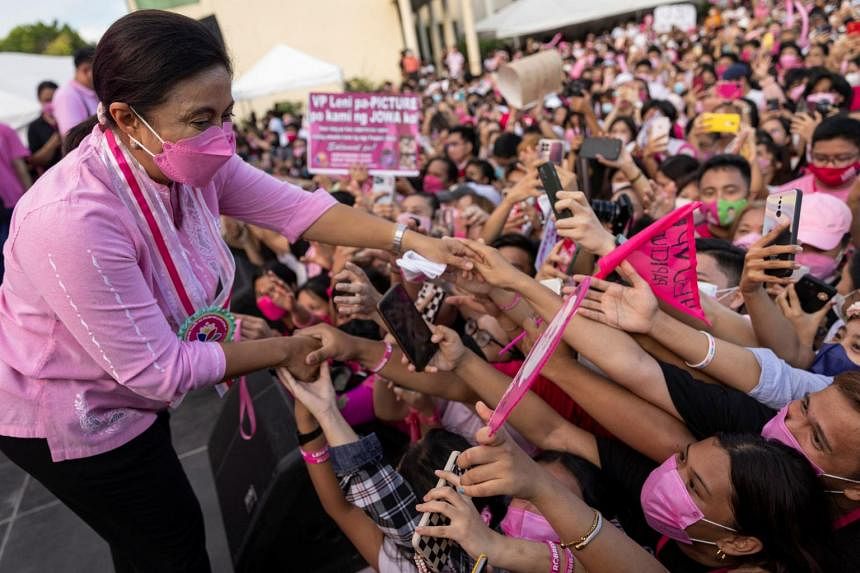
Ma'am VP Leni Robredo, thank you for introducing three concepts new to Philippine politics when you brought them out as the leading items in your political platform during your presidential candidacy campaign: open government, participatory democracy, and a job guarantee policy.
It may not yet be the time for the Filipino people to have them, but you will be remembered as the only presidential candidate in Philippine history (perhaps in contemporary world history) to have had the will to advocate them and become so popular with the people with your introduction of them.
May the next presidential candidate to advocate for them finally succeed after your pioneering effort. [S / -I]
Diagram by Roberto Triviño uploaded to ResearchGate
1. ONE basic thing you need to know about history deniers (historical negationists), fact deniers, fake news writers, and their ilk. They will name anything and anyone as a case to study and confront it/them so to avoid focus on themselves. Don't fall into this trap. They are the cases that you need to examine and confront! The focus ought not to be on anything or anyone other than them! They are the basic issue! Expose everything there is to know about them!!
2. Degrees of Corruption
True, if you're a media or religious institution or persona fixing every now and then the function of your privilege in order to serve the interests of holding companies or specific corporations or of political factions, you deserve to be called corrupt by the President of the State.
Then again, if you're a President of the State who has devoted himself to the facilitation of another state's natural resource and market interests in his state, you are not just displaying corruption of the third or second degree, but absolute treason, one being committed by no less than You as the leader of the government of this State. That is corruption of the supreme or highest universal degree.
3. Planning a Novel
What if I explore this premise for a novel's plot?---
The 21st century. China would only have to look at its history where, once upon a time, there was this British-instigated Opium War against it designed by Britain to get its silk, porcelain, and tea. In that looking back would be born enough inspiration for a now-rich China to plan a 21st-century fear-farming War on Drugs false flag on a neighboring state. They will have to do this through---or care of---a potential puppet in that state that they can sponsor and install as that state's new leader. Once installed, that leader can farm all the fear he wants through that new "Opium War", through which fear-farming war the leader can facilitate China's slow and smooth entry into the leader's state, not just to get this neighboring state's silk, porcelain and tea but resources more precious and ready for a hefty harvest. Does that sound like a good plot for a fiction novel to you? Or would I be plagiarizing life for a historical one?
4. In the Era of Simplified Psychometrics
Garth Jowett and Victoria O'Donnell have provided a concise, workable definition of the term "propaganda," viz., "Propaganda is the deliberate, systematic attempt to shape perceptions, manipulate cognitions, and direct behavior to achieve a response that furthers the desired intent of the propagandist."
Following that definition, it should be easy for us to see why government would be busying itself presently with the labeling of everyone in the divided opposition as "bobos" (stupid people), most especially the Vice-President, Leni Robredo, in recent days.
Is the intent of this propaganda move to shape the manipulable public's perception that it is the critics of this government's policies who are bobo, in order to hide its own series of boo-boos?
Is it to manipulate cognitions that everything that it is doing is the smart thing, if not the only smart thing, which process of manipulation may involve the hyping up of the truly smart it's done and hiding beneath the quilts all the stupid moves it had committed?
Is it to direct behavior towards a derogation of critics and the celebration of this government's supposed revolutions?
I think we're all intelligent enough to know when propaganda is twisting us or sucking us in. Or are we?
And if we are, or suspect we are, being sucked into it, how do we fight it? Do we fight by throwing the same techniques it is using? Or do we fight it by exposing its lies? By exposing all the truths behind its lying?
Do we expose the whole anatomy of processes in its propaganda that aims to "achieve a response that (will further) the desired intent of the propagandist"?
What are those desires?
Are we as a nation intelligent enough to in turn desire answers to these questions? Or are we truly bobos enough to desire nothing, simply wallowing in never-ending trust?
5. THE argument that says Duterte's spitting on due process ought to be thanked because the drug pusher and his addicts that used to be the kings in one's neighborhood are now all gone . . .
is no different from the argument that says Hitler's regime should be thanked because it furthered the popularity of Wagner.
Or don't you see the similarity? If you don't, well, . . . perhaps you never will.
Perhaps you never will see that that legitimization of Hitler by one's deep love of Wagner is the same sort of legitimization that you are placing on Duterte's aggressive wariness towards all his critics, in this republic and outside, a legitimization motored by your understandable love of peace in one particular anecdotal neighborhood.
6. UNTIL that day comes when good people in a land start invoking violent resistance in order to protect rights, violent evil will continue to prosper in that land and in other lands. That is not inciting rebellion. That is a mere articulation of a historical truism operative among frightened peoples in repressive, suspect regimes.
7. ARE we afraid? Myfriends: government is excited about, and not wary of, creating a fearful people, for the fear-farming reasons we articulated above.
But it, government, seems to be ignorant of the fact that courage is actually 100% fear. Let us rejoice, then. For as government makes progress in creating more frightened people, its hold on the people is not strengthened, it is lessened. Fear pa more! [S / -I]
LET’S HAVE a break from all this debate about extrajudicial killings
and about death squads and move to more positive stuff, like community development inputs.
Or, perhaps we could move to such positive topics as community development that may actually offer alternative answers to these very problems at the top of the news, both directly and indirectly. Is that possible, please?
Okay. So who do we talk to, then? Uhm,
a politician or appointed government official with a plan perhaps? Hmm. Oh, I know, why
don’t we talk to a humble security consultant working on solutions, like many others, from the sidelines of the
debate?
Oh, I know, I know. Security consultant, did I say? I realize, of course, that our impression of security consultants whenever we hear
that phrase is either of 1) people behaving like loyal knight warriors to kings
and princes corrupt or otherwise and deeply knowledgeable about things to do
with security and not much else, or 2) a bunch subcontracted by military
agencies to implement operations that cannot, must not, be attached to the name
of the military force of the land, especially when it involves securing private
corporate interests or assassination. But a few years back, during a
meeting about an action-genre comic book project that has yet to see the light
of day, I had the opportunity to meet Hubert Posadas, a humble security
consultant who debunked either of these popular impressions. His concerns definitely
went beyond the usual action-genre defense and offense concerns of security science
and art and explored social empowerment dreams we usually associate with social
entrepreneurs.
Recently, Hubert and I
crossed paths again on Facebook in the light of current anxieties about the
goings-on in the administration of Rodrigo Duterte. Though somewhat sympathetic
to the direction the government is currently taking, he is far from being
uncritical of its overall management of its operations while critical also of
mere criticality. It is in that last, in the criticism of mere criticality,
that our conversation led to an interesting zone, a zone where, it turned out, he
was presently involved in something that economically empowered besieged niches
of society.
As in our comic book project
conversation with painter Marcel Antonio (who was supposed to be the prime artist of the comic book and the one who introduced Hubert to yours truly), Hubert was now, again, not just talking about defense and offense
concerns in the security sense but also in the cultural sense and even the
economic sense. He was now speaking as a co-stockholder of a community security
and permaculture-advocating social enterprise called Dagyaw.
Hubert Posadas of the community security and permaculture social enterprise Dagyaw
(Photo by Vanjoe Clemente)
Hubert with UN consultants
The concept of Dagyaw as both
a community security and permaculture-advocating program formally started in
2015 with the challenge of securing a Mindoro tribe as a client besieged by
threats of losing parts of its ancestral domain to certain interest groups.
This was all happening in the wake of the killings of Lumad chiefs in Mindanao
who lost tracts of their ancestral domain to mining interests. As a security
consultant who has been everywhere, however, Hubert has learned that not
everything about security involves the use of force by a hired group to counter the force of another (hired) group. Sometimes the concept of security is better served
by allowing both sides of a conflict or near-conflict to surrender the concept altogether
in order to arrive at a win-win situation for all, without each side giving up
a claim to anything. Or perhaps security as a concept is best served by the ultimate medium that should be way, way better than any hired security
force: the idea of community security.
Community security is probably familiar to those who've heard of the OSCE-organized Community Security Initiative (CSI) of Kyrgysztan. Or of the Community Security Trust (CST) of the UK. The first, CSI, emphasized
bridge-creation between the police and the community, while the last, CST, was
focused on community organizing for self-defense. Corollarily, we might
remember that in the aftermath of Typhoon Yolanda/Haiyan, barangay governments
and their tanods disintegrated into individuals looking after their own
families, with other virtual leaders sprouting up to take the place of those original
security organizations that momentarily disappeared (the Pareto principle at work); that would be an example of a natural organization of community personnel for community security.
Now, talking about Typhoon
Yolanda/Haiyan, earlier than his Mindoro project Hubert was party, along with
several foreigners, to a permaculture training project in Antique—like we said,
this was in the wake of the problems that arose from the Typhoon Yolanda/Haiyan
catastrophe. This was perhaps where Hubert’s idea of securing communities or
institutions started to expand, to include food security and economic security, for a program that may fit other types of besieged clients, for instance informal
settlements.
And so, currently, in an Antipolo informal settlement site, you would see Hubert’s group focused on introducing a type of community security that 1) augments the
government’s anti-drug dealers program and other policing action against
exploiters of the inhabitants of the informal settlement, and 2) bridges the
gap between informal settlers and owners of idle lands. In the #2 part of this plan,
the informal settlers enter into training with Hubert’s group to be empowered
to enter into contract with the owners of the idle lands to permaculture-farm
those lands with either monetary or produce rent. What results from this is an economic
liberation of a percentage of the community’s unemployed, the provision of self-sustenance
to a part of the settlement’s food needs, and the liberation from idleness of the
idle lands themselves. We must also take into account the fact that the concept
of permaculture is itself a form of security from food source annihilation by
catastrophes, if only because it is agriculture that emulates the ecological
patterns of nature instead of limiting produce to one source, thus providing a
community with surviving food sources after a catastrophe like a strong typhoon has hit it.
Here are parts of our threads of conversation
(adapted for this blog):
Me: . . . the Philippine
problem with democracy is that "we the Filipino people" have a
political culture of always wanting to fight not for our personal causes
primarily but for politicians and such personalities, primarily. We would fight
wars and die for these in the name of our politician or celebrity or sports
team/athlete or favored TV channel. In that sense, "we the Filipino
people" are still living in a monarchic system before the occurrence of
the events that led to the French Revolution. . . . That is why I’m advocating
for the urgent incorporation of direct democracy instruments into government as
what could take us out of that state.
Hubert: Ah, but we are
growing. All the institutions are being questioned, all crumbling, in the
current government. Catharsis begins with these kinds of events, helped by the
dawning of awareness given insight by (various people, like you). Frame the
positive outcome and prescription and see that the change is already here with (such
people as you). Know that it is hard to break old habits but easy to create new
ones. That is why the revolution in psychology has been to steer away from
talking about the past and more on reframing the positive outcome one wants to
produce.
Conditioned helplessness is
the condition wherein one finds oneself constantly complaining without seeing a
solution. The mind must work to find a proof of concept, not just to discuss
logics.
The ability to train the mind
to see a problem as a situation is the first skill in training the mind to find
the solution. That is why we keep changing our leaders without success, because
we only know what we do not want without knowing what we need to do. Most Filipinos
think that the rationale for a movement is in finding a fault and in asking
others to join in agreeing to find fault or to a found fault and to rally
behind that negative statement. They are actually talking about a reaction, not
a revolution.
A revolution is a dynamic of
change from one state to another. Without a clear scalable proof of concept, it
never really becomes a true movement. I think change begins with a small group
with clearly defined action that proves a new reality. Often, everything else around
is reaction.
Me: That’s true. But who
make up that group and what kind of change they’re advocating is crucial.
Historian Xiao Chua said, on a Net25 talk show, something like, "I don't
blame the Americans for keeping to their interests. Ang problema is how well we
fight for ours." Aside from the “how well,” mahalaga ro’n ang “fighting
for our interests” part. And in relation to our common concern, sa tingin ko natumbok
ni Xiao Chua rito sa sinabi niya ang anatomiya ng lumpenbourgeoisie-ness ng
ating lumpenbourgeois politicians na hindi nawawala sa paghahanap ng ibang amo.
Kung ang bagong mga amo ng pagka-lumpenbourgeois mo ay mga Chinese creditors
and investors at hindi na American o European creditors and investors, yun lang
ang nabago; lumpenbourgeois ka pa rin.
Hubert: Tama ka, bro. Ngayon,
pa’no natin maooperationalize yung changes pregnant in the situation you
exposed? Currently my group is starting a bottom-up approach with some
communities, using an initial framework. Maybe you can help us with it.
Kailangan ng proof of concept, pero kailangan din i-mekaniko yung conceptual framework
derived from real conditions. Nag-umpisa kami sa baseline data gathering, papunta
na kami sa community organizing.
Me: Pareho tayo ng
paniniwala diyan sa necessity of proof of concept, to depart from the pure
utopia level of such political concepts as left libertarianism. I was actually
lobbying my mates in a group that was for a moment devoted to the concept of
direct democracy, pero masyadong marami ang obsession ng grupo kaya naging
kalat. I was lobbying for the formation of a direct democracy party of sorts,
not necessarily with the aim of placing candidates in an election but perhaps
of endorsing some. But, anyway, I was primarily lobbying for our group to start
our rise at the bottom, by educating barangays on the availability of direct
democracy options, starting with barangay officials who would want to cooperate
or might even encourage their citizens to participate in this cultural thrust. I
was thinking, one barangay people’s initiative alone succeeding would be worth
covering, if I were a TV network, as it would be a first—as far as I know—and
would have the potential of becoming a model for other barangays to emulate. A
new culture of participatory democracy could be jumpstarted there, with the cooperation
of the media.
Hubert: In our case naman, we
have a good framework that is scalable. We introduce the concept of community security
to address an immediate benefit and something to exercise direct democracy
with. This framework enables what we call our clients to technically increase
their property value and create sustainable food security, thereby creating
place-based economics, integrate informal settlers into the mainstream economy,
mobilize "tambays", and so on. (We even have an internet media
program to cover and document their progress.)
So, this setup enables what
we call our clients to immediately address their basic human needs, prepare
them to survive and thrive during disasters, and foster back old values and
culture like bayanihan and pakikitungo, pakikiisa, etc. We are even incorporating gamifications in order to
land social targets that the shareholders agree upon. The program was designed
with a psychologist and an organization development consultant to maximize
traction on the ground. We are interested in getting more experts on board in
essentially a reality show to create a proof of concept.
Me: This is nice. But what
I'm interested in is how this can expand to inhabit national space and national
culture. The usual way for extending community-specific experiments into
adoption by and for the national evolution is through a political ideological framework
as vehicle, thus through empathies like those for social liberal structures, socialist
structures, direct democracy or participatory democracy structures, even utopian
anarchist structures. So, how a social experiment becomes part of a
governmental ideological policy is what I’m interested in, to go beyond being a
mere isolated project initiated by a social enterprise, to go beyond being the
aid product of corporate social responsibility.
Like, halimbawa, even in
international relations between states, there's really no such thing as aid or
donation na walang kapalit. And although corporate social responsibility
projects may require no “payment” from its beneficiaries other than a sense of
gratitude, it either sustains itself through government “recognition” of their
actions or through profits from contributions coursed through foundations. So
I’m looking for that kind of aid that doesn’t end as a charitable product that
was also profitable for its donor, but an aid that evolves and becomes a part
of the national culture.
So, can a social
enterprise-initiated culture at the bottom blossom into something that would
not just end up being a CNN Hero thing that governments don’t absorb? Can it become
part of national policy, in short a part of government culture?
Now, I know that you have an answer to that query of mine. Pero, before you answer that, let’s talk first about
this obsession ng government ngayon, the illegal drug trade, which some are happy to see finally
addressed as a priority even while some are not happy to see it take the
limelight of sole focus.
Hubert: Ah, meron ding magandang
nangyayari dyan. Yung exposure ng malalim na sitwasyong-panlipunan na ito, kasama na
ang iba pang sitwasyong-panlipunan na pinag-uusapan na ngayon, ay di dapat
maliitin, kahit na medyo di pino ang nangyayaring pag-address sa mga ito.
Me: Yun. Yun din naman ang
magandang kontribusyon ng pamahalaang Duterte, at least in terms of pushing our awareness of the problem to the forefront, the debates on how it's being addressed notwithstanding. Kahit pa ito ay mapatumba as a war, kung
sakali, mananatili na sa ating memorya ang reyalidad na inungkat ng Pangulo para
ito’y makita ng ating matagal nang tulog na mga mata. Kaya if, kung sakali, biglang
may mangyari at kakailanganing pumalit ni Leni Robredo sa trono, it would be
interesting to see kung ano ang gagawin niya sa war on drugs, dahil hindi niya ito pupuwedeng itapon sa tabi bigla, bagamat puwede niyang tawagin ng ibang pangalan. That, along with the
war on other manifestations of elitism by the ruling class which Duterte
brought out into the forefront of the conversation (never mind if his still seems partisan and personal in reality instead of truly ideological).
Afer all, for as long as we
are managed by this ruling class, whether it's an opposition-friendly ruling class or a ruling party-friendly ruling class, we are never going to be united, simply
because the elements in this niche (the lumpenbourgeoisie) are working for
themselves and their factions and not for the nation, thus necessarily dividing
us who are easily duped into siding with the factions the way TV viewers have
been duped into joining either a kapamilya or kapuso or kapatid kind of brand
loyalism.
Hubert: Tama. Tumbok at tumpak.
Duterte is a reaction to the historical
inadequacy of our ruling class. Now, he may not have the right solution, but
his reaction should bring about a coherent response from the citizenry. It is
about time we disengage from being purely pro or against in our respective stance
with regards to this leader, but sift through the destruction of sacred cows
and old boxes to propose and act on the changes we want. That is why I for one
do not complain but act.
Extrajudicial killings, for
instance, are a reaction to a corrupt judicial system, so in order to correct
it I started to promote and train communities on the concept of community security
to both address the drug problem and negate extrajudicial killings. Also, I do
not cry over dead drug dealers but advocate engaging the PLEB to strengthen the
cases against cops killing the innocent. One of my groups has adopted two
community test sites and will start training other village security forces to
adopt a framework that uses involving all community shareholders to address the
problem in cooperation with traditional service providers. This is a highly
technical program that is mission-driven to address the problem. We do not complain.
We act on the ground.
Me: Right. So, mabalik tayo
do’n sa tanong ko in relation to your other social enterprise that combines
community security and permaculture training: again, what I'm interested in is
how this can expand to inhabit national space and national culture. Like I
said, and to repeat it here, the usual vehicle for expanding community-specific
experiments into adoption by and for the national evolution is a political
ideological framework, thus through empathies like those for social liberal
structures, socialist structures, direct democracy or participatory democracy
structures, even utopian anarchist structures, and so on.
Hubert: Mas maganda
magtagpo, dahil—on the one hand—kadalasan yung political parties and their
programs ay nauunsyame sa IRR. Puro theory, walang binti sa lupa. Most current
social changes happen on the outlying, grassroots level; kaya nga lumabas yung
community security framework, permaculture aid, at iba pa, dahil nauna yung
grappling ng proof of concept, tapos napauso pa. Pati sa libro ni Maxwell
Gladwell napatunayan na change comes in the form of a virus. The initial cell
is important, mapa-Arab Spring man, Orange Movement man, o internet revolution.
Proven na rin yun sa experience ko sa community work. Di mo kailangan
i-convince ang lahat. Magsisimula ka lang with a small tribe, tapos kunin mo
yung parehong group mo. Pano magpakilos ng isang toneladang kalabaw? Kunin mo
yung ilong. :-) Anyway, lahat naman ng pagbabago nagsisimula sa maliit, hindi
ito putok sa malaki.
On the other hand naman, yung
experience naman ng community security and permaculture aid ay bottom-up,
eventually leading to a national level. Three-tier milestone. From one local
proof of concept, the cell expands to the municipal/regional level, then national.
Sa second tier, meron din
kasing opening sa local government level. Polity at the bottom is allowed to
create policy. Wala lang naggawa ng technical framework to do it. Yung direct
democracy din kasi merong inherent weakness in that it is inefficient without an
educated and informed electorate, it could lead to the destruction of national resources
at an increased rate unless a universal framework is first established based on
a national resource management goal, with a proviso that you lock the policy on
a sustainable asset management framework for the greatest good of all.
Me: Well, I would like to
see how direct democratic votation on initiatives may have a weakness leading
to the kind of risks you mention, Hubert, considering that votes on initiatives
usually go through six months to three years of debates among all sectors of
society affected by the initiatives. An initiative therefore that allows a
provincial government to sell public black sand and corals to foreign
governments would be debated on by fishermen and their leaders, and I don't see
how such an initiative can win among such a directly affected people. In
contrast, a representative democracy legislature can easily pass such a bill
without the people knowing anything about it.
Tsaka it is a chicken and egg
thing. The people can never be educated about issues unless you involve them in
those issues. The alternative is to stick to status quo, where the few
representatives of the people decide for the millions.
Hubert: I guess tama ka.
Chicken and egg. Kailangan lang i-mechaniko. Let’s keep in touch as we start
documenting our pilot program and share it on the Net.
Pwede ka ba namin
mainterview?
Or guest host kaya sa show?
Me: May show kayo? :) Saan?
Hubert: Yes. Here's a glimpse of "Dagyaw" on YouTube. :)
Me: Baka naman makasira lang
ako sa videos ninyo pag may masabi akong parang devil's advocate ang labas. :D
Hubert: Hindi naman. . . .
Yung attitude namin accepts that. Asset-based thinking and De Bono's Six
Thinking Hats accept that attitude and incorporate it. Maganda rin para ma-juxtapose
sa pag-ba-Bagani na prinopromote naming [no relation to the “baganis” accused
of killing Lumad chiefs in 2015]. It is important because you have to start
with hard facts, then you turn the problem on its head to see the solution. We
just pass it through the process, which is to 1) get the "Problem", 2)
turn it into a "Situation", then 3) pass it into a gap analysis,
milestones and measurable results. Ang dagdag lang namin dito sa lahat ng ito ay
yung pag-apply ng ilang theraputic tools and use of normative culture and practice.
After the introductory
episodes, we set into the laboratory site and use gamification to land social targets,
like I said. Yung paggamit naman ng mga science ng mass marketing and
propaganda ay gagamitin din naman, as in using the tools used against us to
redirect them for social change.
Mas enjoy kasi sa amin ang operators
at hands-on ang approach, e. :-) Pati yung problema masarap!
Me: Pero di mo pa ako
nasasagot. How could this evolve into a political system that creates its own
laws instead of just adapting into the existing system of laws that could in
the end swallow it (you know, property laws, for instance, that would conflict
with an attitude towards the commons).
Hubert: Hahahaha! Our goals
are closer than you think!
The difference is in the method,
something we would rather show in the series than discuss, to create the
correct brand and psychological magic that we intend to create. The key words
are: the commons, place-based economics, community well-being, etc. Show and
tell and approach.
This includes, on my part as Security
Consultant, taking the bull by the horn and signing a contract of service to former
rebels, their communities, as well as indigenous peoples with ancestral domain.
Sila ang kliyente ng mga consultants, yung marketing vehicle yung show.
The resultant political
system will follow from the organized network of stakeholders in the place-based
economics.
Ngayon pa lang, yung mga exclusive
villages are de-facto states and are a polity themselves. I researched legally
if I may treat client communities, informal and marginalized, as well as IP (indigenous
peoples) communities as . . . if legal ba to serve them itong mga usual service
providers. Sabi ng mga lawyers, NICA, and the Left, pwede raw. Wala pa lang nag-isip
gawin yun.
Me: It's good that you
mentioned the word legal. Kasi, from what I'm reading, everything you're
talking about and describing looks good. That's well and good, for as long as
we're aware that there are existing political setups that can intervene and
contradict your progress. The movie Avatar
is a good example. :) But, seriously and realistically, the laws of the land
can creep in anytime and stop you.
Hubert: Yup. Pero ang
advantage kasi natin as consultants, e galing tayo dun sa dating system na yan.
ika nga, na naging enlightened Intelligentsia doing social enterprise. Galing
ako sa isang military contractor kaya alam ko lahat ng ins and outs. Mga kasama
naman natin, mga galing corporations; pero yung mga dati nilang methodologies e
mamimitigate. In fact, when they see the rationale, ma-aaikido mo pa sila. Biro
mo, low start-up, high production and increase in property value that benefit
all? Using their language, ika nga, pero addressing social needs, empowering
the masses as Clients, and not perpetuating a mendicant's mind. (Yes, hindi
mendicants or mere recipients of aid, kasi, siyempre), as Client, kasama dun sa
package para sa kanila ang education, training, certification, marketing, etc.
All kinds of services that will create a place-based economy and professional citizenry.
Ang dami ng sundalo at
rebelde na sawa na sa gera, farming na ang gusto.
Yung gamit ng “law of the land”,
likewise, pwede rin natin gamitin. Tayo rin naman ay pwedeng gumamit ng lawyer
at gumapang. Lahat ng skills ng corporations kaya natin, yung internal wealth
distribution lang natin ang iba sa kanila.
Me: Ang primary concern ko
ay yung property laws, especially those governing land titles. Pero okay yan
kung sa ancestral domain na collective na kaagad ang ownership. Pero paano pag
lumabas na roon at ibang kliyente na?
Hubert: Several models ang
nakikita namin. Yung sa PPP ang pasok natin, to be recognized by DENR. Yung sa
normal community naman ay kukunin natin sa "Community Development
Plan" na nakapasok sa Development Plan na pinapasa ng isang developer.
Meron na tayong partner diyan. Pag nakita ng mga may-ari ng nakatiwangwang na
lupa, nung mga informal settlers, at maging ng mga developers na 1) tataas ang property
value at the lowest possible cost, 2) meron silang tax break in terms of environmental
incentives under the Environmental Act, 3) pwede pala sila immediately kumita
with the informal settlers as Clients and Partners at the production base, e di
gagawa ka na ng trend. Yung mga middle-income din makakabili ng Farm Lifestyle
plots and/or partner with the community.
So, Communal Corporation?
Socialist Corporation? Kahit ano pa itawag mo, yung operation achieves the
stated goals.
Me: Interested din ako dun
sa variants ng internal wealth distribution.
Hubert: Merit-based, to
address the weakness of Communism, with its own privatized health care, housing,
education, etc., to address the weakness of the Capitalist System.
Me: Saan kayo nagsisimula,
sa public lands or private?
Hubert: Private na merong informal
settlers. Napapayag ko yung developer, yung association at yung mga informal settlers
na mag-partner imbes na mag-away.
Pagtakbo nung model, larga
ako sa communities on the edges at sa mga IP. Kailangan ipakita na nagwowork.
Percentage ng increase in value ang usapan. Yung mga gap sa framework from the
baseline data, i-sinub-contract ko sa mga proven organizations, community
development experts, at research and academic orgs, para merong template that
will be scaleable. Education naman is community-based, para walang perang
maipit sa buildings and stockholders—mas magmura sa mga magulang, experiential,
and based sa work for the community and the environment, tapos may kita yung
mga teacher at module developers.
Ang kailangan kasi, e . . . engineering
stage pa kasi tayo. Yung general principles ay gagawing policy na pasok sa
agreed vision, pero without proof of concept and an entrepreneurial spirit,
hanggang vision lang yan. Ika nga, Pinoy tayo e. Kung sa kanila hindi pwede
pagsamahin ang Socialism and Capitalism, sa atin pwede. Ism lang naman yan e.
Me: Ang old -isms naman ay
nag-eevolve. Ang communism ng China ay ibang-iba na ang mukha ngayon, just as
the American Dream is in need of a reengineering to keep it from turning into a
nightmare.
Hubert: Good. Now, we can look
at what is good about both experiences and come up with our own, based on our
own ground conditions. That is pure lateral thinking!
Ang point kasi nito, parang
tubig ang kilos natin. Dun tayo sa merong objective conditions to succeed. Pag
umabot sa point na uso na, e di labanan sa market of ideas; pero at least meron
nang produktong madaling bilhin, which is yung samahan. Yung economic engine at
yung political party iisa.
Meron pang sweat equity na pang-bayad
ng community shares, so ang labas ng tao hindi mendicant. Binayaran niya yung
services ng training, certification, benefits. Hinde siya lalabas na kawawang
tupa.
Me: One additional question,
pre. How do you avoid conflicts between your chosen community leaders and the
barangay leaders as well as between your community security force and the
barangay tanod? Or is the barangay always involved in the organization of the
community security forces? Tsaka what's your concept of community security
outside of besieged client communities---is it to build rapport between the
police/tanod and the community, thus lessening police abuse, as with the OSCE’s
Community Security Initiative in Kyrgysztan?
Hubert: Excellent question.
The first priority is to establish
rapport and gather information about who the community leaders are, to include
the informal leaders, NGO heads, and/or, in some instances, the gated community
Association Board members, etc. Of course it is easier to work with a gated
community or with a subdivision Association, because they already are an
organized polity given recognition by the HULRB/Magna Carta for Homeowners'
Associations.
Following the prescribed formula of Saferworld,
the community development approach, and from practical experience, the survey
proper and needs analysis come first. This part includes interviewing members
of the community and stakeholder representatives what "insecurities"
they have. Now, the common opening is usually on addressing common pains such
as disaster preparation, water, sanitation or even crime issues.
The dialogue then leads to a workshop
to empower these communities. I have yet to come across a community or barangay
that did not appreciate and accept the initial workshop, as it constitutes free
technology for them to effectively address issues. Usually, bringing a third
party technical expert is enough to open the door. The approach is critical in
that one has to establish what the relationship is and what it is not. This is also
critical in that it is the first reframe.
Back in Barbaza, Antique, after the
Yolanda disaster hit the municipality, I assisted a permaculture aid specialist
team that did not bring any relief supply. In fact, the mayor told us the first
time he met us to "Please do not give any more relief goods to my
constituents as they are becoming like mendicant rats," to which we
replied, "Good, we did not come here to give relief goods, but to give
knowledge." So we immediately went to Sitio Cadiao and had a dialogue with
the Kapitan and the Elders. This was Day 1. After assessing from them their
situation, we made a deal to stay and help them if they would meet us as a
community early in the morning to do "dagyaw," which is Visayan for bayanihan. In the beginning the men hemmed
and hawed, saying they had to work on their respective houses; but Steve Cran,
the head of the team, convinced them by asking them how much work they can
accomplish as individuals in one day. We then asked them to try us out for one
day. By day two, within only 4 hours of work, we were able to clean the
mountainside of debris, sort and segregate usable materials, teach them
permaculture principles, and, more importantly, taught them with their
participation how to plan and execute a structured and prioritized plan of
action in an achievable timeframe. We were able to organize them according to
their skill sets and turned what was once a feeling of hopelessness into an
excited and focused energy that started them on to address their situation. By
day 3, two more sitios asked for our help. By the end of the 5th day, we had a project
going with the barangay and the school in the area. So, the above example leads
us to three crucial principles, 1) the community knows what it needs, 2) the
assets are already in place, and, more importantly, 3) the approach: authority by demonstration. This goes
both ways, in gaining trust, and then in pinpointing your Pareto principle concerning
people on the ground. The immediate hands-on work will bring these out.
Going further on this, the important
initial group to work with is your basic community, along with the Association
head if it is a gated community, the Kapitan if it is a sitio, or the Barangay
Captain if it is a barangay without a gated community. Get the basic unit of
community first. From there, once an agreement is made and signed after a
workshop, strengthen this basic unit by experiential
education, meaning to say help them by giving them best practices, a workshop,
and consultation on what their vision for the community is, how it is related
to policy, how policy is related to rules and regulations, and how plans are
related to the whole. Basic knowledge on how to conduct a meeting, how to
document a meeting and a project, how to form committees, etc. are given.
Now, here is an important point: walang libre. I learned this from Steve
Cran who has proven, as one who has worked on UN-sponsored programs in conflict
zones, that it’s better to work with the basic unit of a community as partners,
or, better, as clients. Kahit seedlings or sweat equity for workshops ang
pambayad, dapat meron silang bayad—because you want to cultivate a mindset of
both ownership and non-mendicancy. They take the meetings seriously because
they "paid" for it.
Now, this process, one that organizes
them according to their skills set (from a capacity inventory survey),
immediately seeing them turn out a group who has the skills and a group that
has the planning capability, etc., both working for the low hanging fruit that
will give the maximum impact, creates the community esprit de corps, so to
speak. You make them aware that, 90% of the time, most communities will argue
about the 10% of the things they do not agree on. So the trick is to
immediately make them realize that it is better to work for the 100%
immediately, on the things they agree on, whatever the percentage, and to
empower them further by documentation and recognition of accomplishments as a
community and as individuals qua community champions. After the basic community
is thus empowered, then and only then do we teach them how to liaison with the
next tier of the wider community and what is called the "Traditional
Security Providers," the barangay government and the PNP.
Hubert: Now, as for your
other last question, . . . the community, agreeing to adopt a community
security policy, is thus empowered legally, as by law any community may do this
provided they do proper coordination in matters of apprehension, crime
reporting, etc. Also, a community may also want to enter into a valid contract
with a third-party service provider to be thus empowered, especially if the
service provider and community know the law relating to this.
To tell you a story, nung
executive director ako sa FORA SECNET, I handled the security problems that
ordinary security agencies could not handle for 40 exclusive villages. Dahil
naka-lock kami sa valid policy, rules, regulations and contract, hindi basta
makapasok ang PNP, dahil empowered by awareness yung mga communities and backed
up by documentation process. Yung mga Security Commanders, Security Committeee
Chairmen, maski ako, parang mga hepe inside the community. Hinde basta
makapasok yung PNP! But because we pro-actively worked with the PNP, we were
able to select and work with the police personnel assigned to our area and they
became part of the community and looked after the community’s interest. They
became friends with the community and dared not do anything to destroy their
good name, and the community took care of them.
When I realized that the principle
may apply to the communities of the less fortunate, I asked around first if the
principle applies, and I found out that it does but has not been fully
explored. That moment of realization was when I set out developing the
technical skills to do it, providing this kind of service to the communities of
the masses. There is a provision in the Magna Carta for Communities to
federate. And once I get a number of gated communities to adopt communities
peripheral to their area, to include informal settlers, then we may expand to
gated farming communities. Our ultimate goal? IP communities.
Now, conversely, the setup also aids the
PNP and the barangay government. We "help" the PNP and the barangay government
by making them do their job efficiently and effectively with the community, by reminding them that the Community ultimately
is the Client. We give them recognition of accomplishment, and address
their problems, professionally or personally, as part of the Community, which
they are also a part of, after all. This acts like a magnet on iron filings!
So, you see, positive conditioning is the key! [S /-I]
IF YOU'RE anti-Marcos, you should thank the campaign culture of Bongbong Marcos' camp in the last vice-presidential contest for instigating anger in the people (towards those who ousted Bongbong's father's regime) through the spreading of shady "facts". Anger births insults, hostility, the birthing of which left the new Marcos' camp with nothing more to work with outside of same anger, rendering it unable to convince people with sympathies for the other camps to consider the logic of the new Marcos' camp and thus join what might have been shaped as an open force. But it was not surprising, of course, since a presidential system based on cult personalities for its maintenance, as against a parliamentary system based on a culture of constant debate, is a ready landscape for anger and hostility, anger and hostility deriving from all the personality-based camps towards their enemy camps. Besides, a Marcos position can really do nothing much else, unless it distanced itself from the policies of the father and promised to open its offshore accounts to public access. But, just for the sake of argument, imagine a Marcos campaign that did expand its culture of hostility to the area of amiable persuasion, even aggressive persuasion sans the option to lie. It just might have surprised the Leni Robredo camp with a convincing win. But, as I said, it's not surprising that followers of camps in our nation, any camp at all, would carry this culture of cult personality-based hostility towards the other. Like we said, the presidential system insists on this culture for the maintenance of its star system. It would even, as is often the case, insist on every individual's being either of one camp or another. It might even insist on loyalism. So it was not surprising that every opposition to a Noynoy Aquino decision was met by the Aquino regime with the notion that it was Gloria Macapagal-Arroyo camp-deriving, just as it is not surprising now that Rodrigo Duterte's regime and loyalists paint every opposition to the government's many decisions as an opinion of the "dilawans". Is it possible to remain a citizen within a presidential system while absorbing parliamentary systems' culture of constant amiable debate (or hostile debate, but real debate, as against the non-debate of mere exchanges of expressions of hostility between the colored camps)? I don't know. But if an opposition to the current Duterte government is to grow, it must first learn the Bongbong Marcos campaign shortcoming. Shielding itself from the other's anger through its own anger at those who voted for Duterte would make the presidential system mistake all over again, a mistake of taking another cult-persona's position of distrust towards the other. For instance, if millions of Duterte supporters are to withdraw their support for the president they voted for today, an occurrence that often is not surprising in countries with recall elections for presidents, you can only credit it to people's having gone beyond the mere culture of hostility between cult personality camps and having learned to imbibe the more democratic, perhaps wiser, or smarter, virtues of openness to facts and the other's power of persuasion. [S / -I]
DESPITE my being a part of the convenors' team of ePIRMA (the Empowered People's Initiative and Reform Movement Alliance instigated by Manny SD Lopez with my help) that later joined forces with the Cebu Catholic hierarchy-backed Cebu Coalition and the Makabayan Coalition in a largely evolutionary effort to draft the 2014 People's Initiative Against Pork Barrel, it’s true that I had reservations about the viability of the Philippines’ initiative process as avowed by the existing initiative-enabling law (RA 6735). Assuming that my reservations were loudly expressed and not merely kept to myself, you could say now that my hangup was proven correct. In this video clip from a GMA News coverage of an October 2013 forum at Hotel Rembrandt on Tomas Morato Avenue, watch from 1:46:
I am not, of course, Joey de Veyra (I'm Jojo de Veyra), and I was not trying to "batikos" (criticize) the proposition campaign during the time of this news clip. In fact, despite my being identified as the convenor of a different group (the Facebook group called Forum for Direct Democracy Philippines), I (armed with the FDDP's cause) was among those very individuals trying to convene more people to join in ePIRMA's effort, efforts that culminated in a "people's congress" held at the Asian Institute of Management convention center in December 2013. If you are to get access to a coverage video of my entire speech at that forum---and my answer to a journalist's question on how ePIRMA proposed to do the signature-gathering realistically---you'd see where I stood in that whole affair, despite a supposed ambiguous position I carried according to that very brief portrayal of my voice in that news clip by 24 Oras. But that's immaterial now. The point is that I did, somehow, express reservations about the potential of the effort to succeed, which was a reservation shared by many in the group that also pushed the group to join forces with the Cebu Coalition (which was then loudly doing a parallel campaign in the Visayas) for a more united front.
In August 2014, the initiative was formally launched in Cebu City. I was there as part of ePIRMA. But as regards to what happened soon after the launch, I'd here confess that the signature gathering was mostly left to certain parishes of the more organized Catholic Church, the primary backing of the Cebu Coalition. Sporadic rallies of support were organized by the Makabayan group and provincial groups. In contrast, other members of ePIRMA were seen to have moved on to various other national concerns. Manny SD Lopez---ePIRMA's leading convenor and most active campaigner on the road---would also busy himself with organizing the Christian Peace Alliance, one of the groups advocating for a drastic review of some provisions of the then-in-its-final-thrust Bangsamoro Basic Law. Lopez would also form the EdlSA 2.22.15 Coalition, a group that called for President Benigno Aquino III's resignation after the Mamasapano mishap. I myself soon became part of an online art magazine. So, I submit that in this latter period I was not privy anymore to how the signature-gathering for the initiative on the pork barrel was progressing. I did hear of some pockets of resistance to the initiative, as well as the Comelec's seeming lack of enthusiasm towards verifying the signatures, but that's about it. . . .
Then came the various noises leading to the 2016 general election, within which any news concerning the initiative's progress was nowhere to be found on Google. Not anymore.
Then came the elections. And, guess what: Rody Duterte became our new President, and Leni Robredo our new Vice President. What do these names mean? Or, rather, what---ideally---should these names mean to us?
DUTERTE belongs to the PDP-Laban, a political party that claims to be for popular democracy (populism) and participatory democracy. Robredo, in turn, is the wife of the late Jesse Robredo; Jesse made a name for himself as a stalwart of participatory governance in his capacity as mayor of Naga City before he became the Interior Secretary of Noynoy Aquino. Leni, as Jesse's widow, was soon drafted by the Liberal Party to run for Congress; she won and became a vocal campaigner for participatory democracy and, as a priority, participatory budgeting (you can read my worldview on Leni Robredo's decorative role within the Liberal Party government by clicking here).
What, to me, the whole situation means to signal is this: that perhaps the time is ripe for a more realistic RA 6735, one that would provide the people a usable initiative instrument in lieu of the existing one that simply provides a semblance of direct democracy that ultimately ends up as short (because near impossible to fulfill the requirements of).
Thus, for us to truly provide a usable instrument for a participatory government of the people, by the people and for the people (as against the continuance of our present purely-representative democratic governance by the prescriptive representatives of the people, of the prescriptive representatives of the people and ultimately for the interests of these supposed representatives of the people), let me now propose the following amendments to RA 6735 (even before that new federal-parliamentary Constitution being proposed by the Duterte government arrives). My proposed amendments are here below, in red, which a lawyer out there could perhaps to more properly articulate:
Section 5.Requirements.— (a) To exercise the power of initiative or
referendum, at least ten per centum (10%) of the total number of the registered
voters, of which every legislative district is represented by at least three
per centum (3%) of the registered voters thereof in the case of Constitutional amendment, and of which every region is represented by at least three per centum (3%) of the registered voters in the case of national statute initiatives, shall sign a petition for the purpose and register the same with the
Commission.
(b2)
A petition for an initiative on a
new national statute, or one on an initiative seeking to amend an existing statute, must have at least twelve per centum (12%) of the
total number of registered voters as signatories, of which every region must be represented by at least three per centum (3%) of the registered voters
therein. Initiative seeking to amend an
existing national statute may be exercised
only after three (3) years from the ratification of the same
and only once every three (3) years thereafter.
Section 7.Verification of Signatures.— The Election Registrar is obligated to
verify the signatures on the basis of the registry list of voters, voters'
affidavits and voters identification cards used in the immediately preceding
election within twenty (20) days from
receipt of the petition.
SECTION 8.Conduct
and Date of Initiative or Referendum.— The Commission shall call and supervise the conduct of initiative
or referendum. Within a
period of thirty (30) days from receipt of the petition, the Commission shall,
upon determining the sufficiency of the petition within fifteen (15) days
from receipt of the same, publish the same in Filipino and English at least twice in
newspapers of general and local circulation and set the date of the initiative
or referendum which shall not be earlier than forty-five (45) days but not
later than ninety (90) days from the determination by the Commission of the sufficiency
of the petition.
My arguments-cum-reasons for these amendments, should they appear to be not so obvious, I shall provide later in other essays. For now let me say that the signature requirement of 3% of the registered voting population per legislative district is, while required by the Constitution for Constitutional amendments, is just too steep for the creation of new statutes and initiatives seeking to amend existing statutes. Furthermore, with that requirement, it is possible for one legislative district to hostage the national interest, which definitely runs counter to the tenets of democracy and plurality. Furthermore, the period required for the Comelec to do its job in the management of this process must be accompanied with administrative penalties to avoid any inside filibustering of this democratic process. . . . [S / -I]
YELPED and whispered all over town are these
recent interesting news about some/many administration people’s growing
enthusiasm for the sudden bright idea of trying to quickly change the charter,
better known in the media under the appellative of Charter Change (or Cha-Cha).
The goal, unabashedly intimated, is to give the President a chance to
run for a second term, currently an unconstitutional undertaking.
Incidentally,
there are also these two interlinked announced upcoming events. One is the
August 23 multi-sector “people’s congress” in Cebu City backed by the Catholic
Church that hopes to launch on the same day the People’s Initiative Against the
Pork Barrel (or PIAP), an initiative that would criminalize pork barrel fund
creation and spending (and render as suspect certain items in the current
budget plan for 2015). Then there’s the August 25-scheduled rally against the continuing
pork barrel system (this will likewise commemorate the Million People March,
one year to this day, as well as formally bring the PIAP signature campaign to Luzon).
The initiative is a product of the awakened awareness in the Filipino
psyche of the people’s right and privilege to be participants in government care of that long-hidden direct
democracy instrument lurking behind Article XVII, Section 2, of the
Constitution, which instrument was enabled by Republic Act 6735 (The Initiative and Referendum Act of
1987-1989) that had likewise hitherto been a sleeping/unused law.
By this awakened direct-democratic awareness, therefore, some quarters
fear that the charter change being cooked by the Aquino government will also be used
to totally overhaul the 1987 Constitution, which could possibly result in
the removal of the direct-democracy clause that the political elite in Congress
will presumably do anything to be rid of to consequently keep its grip on
discretionary or confidential funds and keep the people and the Supreme Court (which recently rendered such funds as unconstitutional) out of the picture and the
ball game.
But, should that happen, … well, … wouldn’t the
Marxists triumph and feel vindicated in their belief that only armed
struggle and subversion can truly wrest abuse away from the management of the
political elite and place justice in the hands of the people? They’d say, “see?
We told you so. Since the political elite will never ever allow the people to
muster power for change, a change that the political elite in our fake
democracy fears will tear their access to privileges upon the country’s coffers
away from them, the only way to achieve change then is by
subverting their respective existences. Direct democracy, or true democracy (demos people, kratos power), will never be allowed to happen by the sublime royal class that rules our, actually, plutocratic state.”
STILL and all, I remain armed (not with a gun, but) with the hope that there are still ruling-party elements today who, 1.) in their hearts, would want to be true to their Liberal tag as social liberals and, 2.) in spirit, would opt to be placed an ocean away from their neoliberal, corporate liberal, interest-group liberal and limousine liberal peers, and therefore might perhaps to remember that RA 6735 used to be not an anti-Noynoy Aquino administration vehicle but a Liberal Party cause (after all, it was co-authored by that late LP stalwart, Neptali Gonzales, wasn’t it?). In short, they just might rally for more social liberal influence in the process of governance at Malacañang as this governance develops in the ticking present. Leni Robredo, for one, is an advocate of participatory budgeting and participatory democracy, albeit her bill on this issue is absent the Porto Alegre model’s requirement of electing the municipal district delegates. (The Porto Alegre participatory budgeting model with elected, instead of merely appointed by someone or by some committee, delegates is crucial to avoiding participatory budgeting’s being used again as just another Janet Lim-Napoles-scam-like instrument for the corrupt among the political elite. A frown on the absence of that requirement was made manifest upon the curious program of DILG Secretary and presidential aspirant Mar Roxas, which was porkishly called Grassroots Participatory Budgeting Process, when the existence of that “process” of disbursing lump sums started to be known in the media). Robredo, however, is also an advocate of open government, and would thus be logically open to such amendments as we implied above to her participatory budgeting bill.
Isn’t it ironic that one of the lawyers defending the impeached Chief
Justice Renato Corona during his trial, Jose M. Roy III, is now one of the
voices rallying—behind former Chief Justice Reynato Puno—for the necessity and timely triumph
of the people’s empowerment through the People’s Initiative instrument? Ironic,
in the sense that he was then defending a Justice believed by many to be a puppet of
the former Macapagal-Arroyo royalist gang but now seems to have the people as
his pro bono client, whilst the Liberal Party of President Aquino’s allegedly anti-corruption “Straight Path”
governance is now being accused by the people of scattering an abundance of
pork barrels (for his political elite base) as well as of rigging biddings and protecting tax evading
companies that supported the party’s campaign.
But let’s go back to the ruling-party social liberals (Neptali Gonzales’ ideological children) currently trying to maintain influence in the Liberal Party against the influence of their corporate-liberal mates. And I’d say, should charter change win the day anytime this year and any amount of Million People Marches gets frustrated and produces nothing, then perhaps all that the social liberal faction in that ruling party can do (with the people behind them) is offer the following title and articles for incorporation into the new charter to counter the corporate liberals’ likely wish to remove the people’s initiative clause in the presently-existing constitution. The title and articles below are adaptations of a title and articles from the Swiss Constitution, which some would protest against for being Swiss, but must everything in our Constitution be copied from the texts of American political elitism and plutocratic accommodation? The text are from admin.ch,
with my adaptations for possible Philippine use:
Title
4: The People and the Regions
Chapter
1: General Provisions
Art.
136 Political rights
1 All Filipino citizens over the age of
eighteen, unless they lack legal capacity due to mental illness or mental
incapacity, have political rights in national matters. All citizens have the
same political rights and duties.
2 They may participate in elections to the
National Parliament and in national popular votes, and launch or sign popular
initiatives and requests for referendums in national matters.
Art.
137 Political parties
The political parties shall contribute to
forming the opinion and will of the People.
Chapter
2: Initiative and Referendum
Art.
138 Popular initiative requesting the complete revision of the Constitution
1 Any 1,250,000
persons eligible to vote may within 18 months of the official publication of
their initiative propose a complete revision of the Constitution.
2 This
proposal must be submitted to a vote of the People.
Art.
139 Popular initiative requesting a partial revision of the Constitution in
specific terms
1 Any 1,250,000
persons eligible to vote may within 18 months of the official publication of
their initiative request a partial revision of the Constitution.
2 A popular
initiative for the partial revision of the Constitution may take the form of a
general proposal or of a specific draft of the provisions proposed.
3 If the
initiative fails to comply with the requirements of consistency of form, and of
subject matter, or if it infringes mandatory provisions of international law,
the National Parliament shall declare it to be invalid in whole or in part.
4 If the National
Parliament is in agreement with an initiative in the form of a general proposal,
it shall draft the partial revision on the basis of the initiative and submit
it to the vote of the People and the Regions. If the National Parliament
rejects the initiative, it shall submit it to a vote of the People; the People
shall decide whether the initiative should be adopted. If they vote in favour,
the National Parliament shall draft the corresponding bill.
5 An
initiative in the form of a specific draft shall be submitted to the vote of
the People and the Regions. The National Parliament shall recommend whether the
initiative should be adopted or rejected. It may submit a counter-proposal to
the initiative.
Art.
139a…
Art.
139b Procedure applicable to an initiative and
counter-proposal
1 The People
vote on the initiative and the counter-proposal at the same time.
2 The People
may vote in favour of both proposals. In response to the third question, they
may indicate the proposal that they prefer if both are accepted.
3 If in
response to the third question one proposal to amend the Constitution receives more
votes from the People and the other more votes from the Regions, the proposal that
comes into force is that which achieves the higher sum if the percentage of
votes of the People and the percentage of votes of the Regions in the third
question are added together.
Art.
140 Mandatory referendum
1 The
following must be put to the vote of the People and the Regions:
a. amendments to the Constitution;
b. accession to organisations for collective security
or to supranational communities;
c. emergency national acts that are not based on a
provision of the Constitution and whose term of validity exceeds one year; such
national acts must be put to the vote within one year of being passed by the National
Parliament.
2 The
following are submitted to a vote of the People:
a. popular initiatives for a complete revision of the
Constitution;
b. popular initiatives for a partial revision of the
Constitution in the form of a general proposal that have been rejected by the National
Parliament;
c. the question of whether a complete revision of the
Constitution should be carried out, in the event that there is disagreement
between the Parliamentarians.
Art.
141 Optional referendum
1 If within
100 days of the official publication of the enactment any 700,000 persons eligible
to vote or any of the Regions request it, the following shall be submitted to a
vote of the People:
a. national acts;
b. emergency national acts whose term of validity
exceeds one year;
c. national decrees, provided the Constitution or an
act so requires;
d. international treaties that:
1. are of unlimited duration and may not be
terminated;
2. provide for accession to an international
organisation;
3. contain important legislative provisions or whose
implementation requires the enactment of national legislation.
2 ...
Art.
141Implementation of international treaties
1 If the
decision on ratification of an international treaty is subject to a mandatory referendum,
the National Parliament may incorporate in the decision on ratification the amendments
to the Constitution that provide for the implementation of the treaty.
2 If the
decision on ratification of an international treaty is subject to an optional referendum,
the National Parliament may incorporate in the decision on ratification the amendments
to the law that provide for the implementation of the treaty.
Art.
142 Required majorities
1 Proposals
that are submitted to the vote of the People are accepted if a majority of those
who vote approve them.
2 Proposals
that are submitted to the vote of the People and Regions are accepted if a majority
of those who vote and a majority of the Regions approve them.
3 The result
of a popular vote in a Region determines the vote of the Region.
NOW,
certainly there are parts of the 1987 Philippine Constitution’s Article XVII,
Section 2, that could be incorporated here, where they don’t conflict with what
is here.
Obviously, also, Republic Act 6735 will henceforth need some rewriting to adapt it to the above constitutional requirements and terms, and perhaps even partly incorporated here.
But, there you go. That’s my piece. I’ve
been transparent with my Cha-Cha dreams, and, now, how I wish the Aquino
government will likewise publish somewhere its proposals for its Cha-Cha dreams
in their transparent totality. . . .
But, of course, I’d totally understand if this now-only-arguably-“liberal” Aquino administration faction opts to continue to be secretive about it. I would
totally, totally understand if it does. Wouldn’t you? [END]