Showing posts with label open government. Show all posts

Friday, October 24, 2025

QUEZONIAN CONTEXTS FOR OUR TIME


“I WOULD rather have a country run like hell by Filipinos than a country run like heaven by the Americans, because however bad a Filipino government might be, we can always change it.” Quezon the movie adopted another version of that quote, which ends with "because no matter how bad, a Filipino government might be improved." In our time, those two versions would differ significantly.

THE former. The former could be used to refer to a US-modeled system of government with a strong president under a strongly-representative democracy CHANGED IN THE FUTURE, after repeated demonstrations of failure, to a more democratic parliamentary form perhaps, and/or to one under a more participatory democracy or quasi-direct democracy like that of Switzerland. The word "can" is optimistic towards Filipinos' capacity to create or instigate or demand such a transition or transformation. The latter. The latter version of the quote (with "might") is less positive, but perhaps more realistic, as if cognizant of the fact that we have always had a policy of maintaining ignorance and propaganda-vulnerability in our country's overwhelming majority (simply via our education system that refuses to be fully socialized and takes pride in a hierarchism of trainings). But although the latter is realistic, almost implying a pessimism or as if subtly preaching the impossibility of hoping, it is however ignorant of the fact that a government molded through a plutocratic model of fake democracy WILL NEVER ALLOW ITSELF TO BE "IMPROVED". Or is it pessimistic precisely because of the near-impossibility of seeking improvements within it?

WHICH version do you prefer? At the risk of sounding like a Macchiavellian inciter of armed rebellion, I'd say that such a plutocratic/kleptocratic government system that has allowed so much power among its wielders will indeed never allow a more open government, or share legislative power with the people through truly-useful initiatives, and that the only time it will allow these to encroach into the system is when a revolution occurs that would demand the upending of those eternal refusals. As an open government and participatory democracy advocate I'll risk stating that statement bordering on Macchiavellian or otherwise Marxist pessimism, however, knowing full well that Filipinos currently want to upend our current system that continues to refuse significant changes only through the lens of either communism or Islamism, both of which our plutocracy has been able to keep at bay. Filipinos will never go to war against our eternally corrupt plutocracy in the name of open government or a quasi-direct democracy. . . . Never. Although they might be able to, someday. Can change. Might improve. Two different worlds in a parallel universe.


Friday, October 10, 2025

Wala


HABANG hinihintay daw ang resulta ng imbestigasyon ng "Independent Commission for Infrastructure" (sic), may nagsa-suggest sa Senado ng isang tax holiday, isa naman bagong DPWH with new employees. Walang nagsa-suggest ng bill para sa mas transparent na gobyerno!!!
    Aasikasuhin na raw ang "anti-dynasty bill" at bill providing additional powers sa "Independent Commission for Infrastructure". Pero, again: as usual, no bill to make government more transparent!!!

NAWALA ang pork barrel, pinalitan ng insertions. Kung mawawala na ang insertions, ano ang ipapalit ng political families ng Pilipinas para maipagpatuloy ang kanilang . . .
    Oh, the performative rage of government leaders everywhere! But only a handful of them would actually back an open government bill!
    
For as long as walang gagawing mother batas for an open government, lahat ng legislation na isusulat ay malulusutan in the near future! Ganyan katalino ang mga kriminal sa ating Konggreso!!!
    Kaya "open government" na now!!! Hindi lang sa SALN!!!


Tuesday, September 10, 2024

Abolish Congress?

REFERENCING a supposed Congressional tradition of according the Office of the Vice President absolute courtesy in relation to questions regarding the "confidential funds controversy" involving the said Office, Congressman Rodante Marcoleta invoked the supremacy of that tradition over congressmen's queries, which latter by the way is in itself a part of the tradition or anatomy of Congressional hearings. Congressman Marcoleta forgets that while it's true that Congress operates with certain of those traditions installed through the decades, it exists solely on the promise that, as a legislative and enquiry body, it might also be able to create little or otherwise major revolutions for the people. In the absence of this promise, the necessity of a Congress or the rationale behind having a Congress at all disappears, and Marcoleta as a congressman would as a consequence of that disappearance cease to have a reason to exist as well.


Wednesday, May 11, 2022

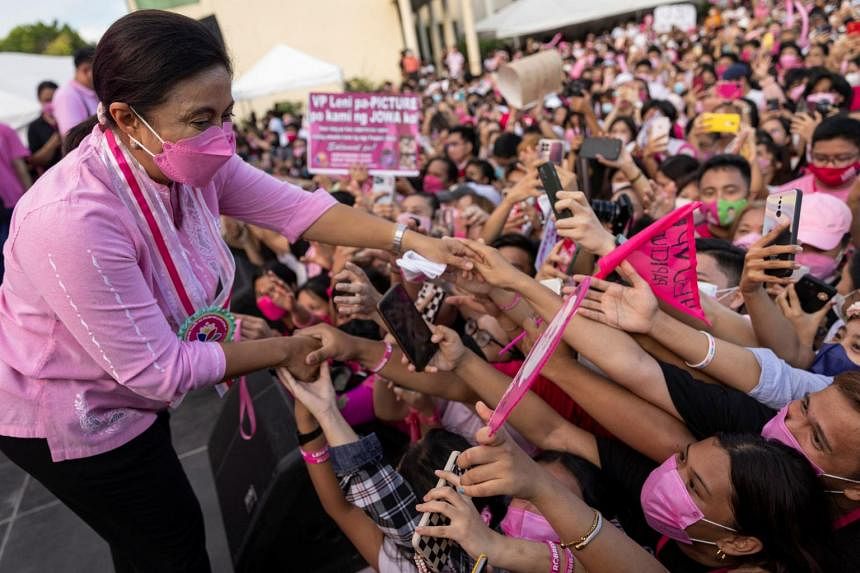
Salamat, Ma'am VP Leni Robredo, for your pioneering effort


Photo from The Straits Times

Ma'am VP Leni Robredo, thank you for introducing three concepts new to Philippine politics when you brought them out as the leading items in your political platform during your presidential candidacy campaign: open governmentparticipatory democracy, and a job guarantee policy.

It may not yet be the time for the Filipino people to have them, but you will be remembered as the only presidential candidate in Philippine history (perhaps in contemporary world history) to have had the will to advocate them and become so popular with the people with your introduction of them.

May the next presidential candidate to advocate for them finally succeed after your pioneering effort. [S / -I]


Diagram by Roberto TriviƱo uploaded to ResearchGate


Monday, August 18, 2014

Does it take Transparency and Vigilance, for them to tango?


YELPED and whispered all over town are these recent interesting news about some/many administration people’s growing enthusiasm for the sudden bright idea of trying to quickly change the charter, better known in the media under the appellative of Charter Change (or Cha-Cha).
     The goal, unabashedly intimated, is to give the President a chance to run for a second term, currently an unconstitutional undertaking.

Photo borrowed from rappler.com
     Incidentally, there are also these two interlinked announced upcoming events. One is the August 23 multi-sector “people’s congress” in Cebu City backed by the Catholic Church that hopes to launch on the same day the People’s Initiative Against the Pork Barrel (or PIAP), an initiative that would criminalize pork barrel fund creation and spending (and render as suspect certain items in the current budget plan for 2015). Then there’s the August 25-scheduled rally against the continuing pork barrel system (this will likewise commemorate the Million People March, one year to this day, as well as formally bring the PIAP signature campaign to Luzon).
     The initiative is a product of the awakened awareness in the Filipino psyche of the people’s right and privilege to be participants in government care of that long-hidden direct democracy instrument lurking behind Article XVII, Section 2, of the Constitution, which instrument was enabled by Republic Act 6735 (The Initiative and Referendum Act of 1987-1989) that had likewise hitherto been a sleeping/unused law.
     By this awakened direct-democratic awareness, therefore, some quarters fear that the charter change being cooked by the Aquino government will also be used to totally overhaul the 1987 Constitution, which could possibly result in the removal of the direct-democracy clause that the political elite in Congress will presumably do anything to be rid of to consequently keep its grip on discretionary or confidential funds and keep the people and the Supreme Court (which recently rendered such funds as unconstitutional) out of the picture and the ball game.
     But, should that happen, … well, …  wouldn’t the Marxists triumph and feel vindicated in their belief that only armed struggle and subversion can truly wrest abuse away from the management of the political elite and place justice in the hands of the people? They’d say, “see? We told you so. Since the political elite will never ever allow the people to muster power for change, a change that the political elite in our fake democracy fears will tear their access to privileges upon the country’s coffers away from them, the only way to achieve change then is by subverting their respective existences. Direct democracy, or true democracy (demos people, kratos power), will never be allowed to happen by the sublime royal class that rules our, actually, plutocratic state.”

STILL and all, I remain armed (not with a gun, but) with the hope that there are still ruling-party elements today who, 1.) in their hearts, would want to be true to their Liberal tag as social liberals and, 2.) in spirit, would opt to be placed an ocean away from their neoliberal, corporate liberal, interest-group liberal and limousine liberal peers, and therefore might perhaps to remember that RA 6735 used to be not an anti-Noynoy Aquino administration vehicle but a Liberal Party cause (after all, it was co-authored by that late LP stalwart, Neptali Gonzales, wasn’t it?). In short, they just might rally for more social liberal influence in the process of governance at MalacaƱang as this governance develops in the ticking present. Leni Robredo, for one, is an advocate of participatory budgeting and participatory democracy, albeit her bill on this issue is absent the Porto Alegre model’s requirement of electing the municipal district delegates. (The Porto Alegre participatory budgeting model with elected, instead of merely appointed by someone or by some committee, delegates is crucial to avoiding participatory budgeting’s being used again as just another Janet Lim-Napoles-scam-like instrument for the corrupt among the political elite. A frown on the absence of that requirement was made manifest upon the curious program of DILG Secretary and presidential aspirant Mar Roxas, which was porkishly called Grassroots Participatory Budgeting Process, when the existence of that “process” of disbursing lump sums started to be known in the media). Robredo, however, is also an advocate of open government, and would thus be logically open to such amendments as we implied above to her participatory budgeting bill.
     Isn’t it ironic that one of the lawyers defending the impeached Chief Justice Renato Corona during his trial, Jose M. Roy III, is now one of the voices rallying—behind former Chief Justice Reynato Puno—for the necessity and timely triumph of the people’s empowerment through the People’s Initiative instrument? Ironic, in the sense that he was then defending a Justice believed by many to be a puppet of the former Macapagal-Arroyo royalist gang but now seems to have the people as his pro bono client, whilst the Liberal Party of President Aquino’s allegedly anti-corruption “Straight Path” governance is now being accused by the people of scattering an abundance of pork barrels (for his political elite base) as well as of rigging biddings and protecting tax evading companies that supported the party’s campaign.
     But let’s go back to the ruling-party social liberals (Neptali Gonzales’ ideological children) currently trying to maintain influence in the Liberal Party against the influence of their corporate-liberal mates. And I’d say, should charter change win the day anytime this year and any amount of Million People Marches gets frustrated and produces nothing, then perhaps all that the social liberal faction in that ruling party can do (with the people behind them) is offer the following title and articles for incorporation into the new charter to counter the corporate liberals’ likely wish to remove the people’s initiative clause in the presently-existing constitution. The title and articles below are adaptations of a title and articles from the Swiss Constitution, which some would protest against for being Swiss, but must everything in our Constitution be copied from the texts of American political elitism and plutocratic accommodation? The text are from admin.ch, with my adaptations for possible Philippine use:

Title 4: The People and the Regions

Chapter 1: General Provisions

Art. 136 Political rights

1 All Filipino citizens over the age of eighteen, unless they lack legal capacity due to mental illness or mental incapacity, have political rights in national matters. All citizens have the same political rights and duties.

2 They may participate in elections to the National Parliament and in national popular votes, and launch or sign popular initiatives and requests for referendums in national matters.

Art. 137 Political parties
The political parties shall contribute to forming the opinion and will of the People.

Chapter 2: Initiative and Referendum

Art. 138 Popular initiative requesting the complete revision of the Constitution

1 Any 1,250,000 persons eligible to vote may within 18 months of the official publication of their initiative propose a complete revision of the Constitution.

2 This proposal must be submitted to a vote of the People.

Art. 139 Popular initiative requesting a partial revision of the Constitution in specific terms

1 Any 1,250,000 persons eligible to vote may within 18 months of the official publication of their initiative request a partial revision of the Constitution.

2 A popular initiative for the partial revision of the Constitution may take the form of a general proposal or of a specific draft of the provisions proposed.

3 If the initiative fails to comply with the requirements of consistency of form, and of subject matter, or if it infringes mandatory provisions of international law, the National Parliament shall declare it to be invalid in whole or in part.

4 If the National Parliament is in agreement with an initiative in the form of a general proposal, it shall draft the partial revision on the basis of the initiative and submit it to the vote of the People and the Regions. If the National Parliament rejects the initiative, it shall submit it to a vote of the People; the People shall decide whether the initiative should be adopted. If they vote in favour, the National Parliament shall draft the corresponding bill.

5 An initiative in the form of a specific draft shall be submitted to the vote of the People and the Regions. The National Parliament shall recommend whether the initiative should be adopted or rejected. It may submit a counter-proposal to the initiative.

Art. 139a…

Art. 139b Procedure applicable to an initiative and counter-proposal

1 The People vote on the initiative and the counter-proposal at the same time.

2 The People may vote in favour of both proposals. In response to the third question, they may indicate the proposal that they prefer if both are accepted.

3 If in response to the third question one proposal to amend the Constitution receives more votes from the People and the other more votes from the Regions, the proposal that comes into force is that which achieves the higher sum if the percentage of votes of the People and the percentage of votes of the Regions in the third question are added together.

Art. 140 Mandatory referendum

1 The following must be put to the vote of the People and the Regions:
a. amendments to the Constitution;
b. accession to organisations for collective security or to supranational communities;
c. emergency national acts that are not based on a provision of the Constitution and whose term of validity exceeds one year; such national acts must be put to the vote within one year of being passed by the National Parliament.

2 The following are submitted to a vote of the People:
a. popular initiatives for a complete revision of the Constitution;
b. popular initiatives for a partial revision of the Constitution in the form of a general proposal that have been rejected by the National Parliament;
c. the question of whether a complete revision of the Constitution should be carried out, in the event that there is disagreement between the Parliamentarians.

Art. 141 Optional referendum

1 If within 100 days of the official publication of the enactment any 700,000 persons eligible to vote or any of the Regions request it, the following shall be submitted to a vote of the People:
a. national acts;
b. emergency national acts whose term of validity exceeds one year;
c. national decrees, provided the Constitution or an act so requires;
d. international treaties that:
1. are of unlimited duration and may not be terminated;
2. provide for accession to an international organisation;
3. contain important legislative provisions or whose implementation requires the enactment of national legislation.

2 ...

Art. 141 Implementation of international treaties

1 If the decision on ratification of an international treaty is subject to a mandatory referendum, the National Parliament may incorporate in the decision on ratification the amendments to the Constitution that provide for the implementation of the treaty.

2 If the decision on ratification of an international treaty is subject to an optional referendum, the National Parliament may incorporate in the decision on ratification the amendments to the law that provide for the implementation of the treaty.

Art. 142 Required majorities

1 Proposals that are submitted to the vote of the People are accepted if a majority of those who vote approve them.

2 Proposals that are submitted to the vote of the People and Regions are accepted if a majority of those who vote and a majority of the Regions approve them.

3 The result of a popular vote in a Region determines the vote of the Region.


NOW, certainly there are parts of the 1987 Philippine Constitution’s Article XVII, Section 2, that could be incorporated here, where they don’t conflict with what is here.
     Obviously, also, Republic Act 6735 will henceforth need some rewriting to adapt it to the above constitutional requirements and terms, and perhaps even partly incorporated here.
     But, there you go. That’s my piece. I’ve been transparent with my Cha-Cha dreams, and, now, how I wish the Aquino government will likewise publish somewhere its proposals for its Cha-Cha dreams in their transparent totality. . . .
     But, of course, I’d totally understand if this now-only-arguably-“liberal” Aquino administration faction opts to continue to be secretive about it. I would totally, totally understand if it does. Wouldn’t you? [END]


Tuesday, January 28, 2014

I had a dream


THAT MAN named Bong Revilla, whom the people elected in 2004 to be one among the senators of our republic, has now likewise accused Mar Roxas of being such a “Boy Pick-Up,” referencing of course how Roxas supposedly drove the car that picked up the senator (and another senator) for a meeting at the Pangarap House of MalacaƱang. In that house, the President supposedly waited for them so they could all talk about some pressing issue that required the senators’ physical presence. Revilla alleges that Boy Pick-Up was obviously part of the plan to bribe senators into voting “Guilty” that would then convict a Supreme Court Chief Justice in an impeachment trial. MalacaƱang, confirming the meeting did happen, denied the meeting had anything to do with the trial. Whatever.
     Only recently, Boy Pick-Up had been getting such a hammering from the media (local and international) and the citizenry for his supposed mishandling of the Typhoon Yolanda tragedy and crisis. At one point, on an Internet blog, his chance of becoming President in 2016 (a personal ambition he has flaunted for about a decade now) was illustrated by a headstone, on which this inscription was written: “Here lie the political ambitions of Manuel ‘Mar’ Roxas II … ‘A Casualty of Arrogance and Stupidity’”.

image borrowed from http://kensanph.wordpress.com/2013/12/13/r-i-p-mar-roxas/
     It doesn’t matter that a week ago the mayor of Tacloban City, Alfred Romualdez, and Roxas patched up frayed relations. Roxas’ media image as a defensive and ambitious hijo who can’t take responsibility for a grave mistake has perhaps now been embedded on many a citizen’s memory. Just as it didn’t help early in November last year when wife Korina Sanchez tried to correct the impressions of a CNN reporter named Anderson Cooper, an effort some say only pushed the Roxases deeper into the mud of popular abhorrence.


LAST DECEMBER 19, I hitched a ride to a meeting in Tagaytay City on the van of Mr. Jun Castillo of the Philippine Coconut Society. He was also on his way to that meeting I was to attend, of the anti-pork barrel politics and direct democracy-advocating alliance called ePIRMA. Somewhere near the C-5 Road, we picked up one of Jun’s friends, Mandy Manaloto, a public relations man who—as we climbed the Gen. Emilio Aguinaldo Highway towards the mountain city—broached the problematic of a Mar Roxas candidacy in the presidential race of 2016. He said, “It would be quite a challenge for a PR team to try to create a turnaround for Roxas, make him smell good again.”
     And how was he supposed to smell good again, from the perspective of the ruling party?
     Well, MalacaƱang would likely deny it, but to many it’s been obvious the President had been helping Roxas get the spotlight on what might be the latter’s media run to the 2016 contest. After all, it could have been part of the deal when Roxas gave way to the President in the Liberal Party’s bid for the presidential post in 2010, after the President became the more popular Liberal Party item of the sudden moment created by the death of his mother, the Philippines’ democracy icon, Corazon Aquino. Serendipitous death, some whispered, that witnessed an overwhelming support on the roadsides for the former President during a longish funeral parade, priming Benigno III to top the dynamic private surveys, a sudden popularity shaped by association rather than gargantuan merit, in that last year of years of corruption and impunity under Gloria Macapagal-Arroyo’s presidency.
      More than two years into his presidency, Benigno III appointed Roxas to the Department of Interior and Local Government (DILG) secretary portfolio. Roxas was Noynoy Aquino’s running mate (who lost) during the 2010 election, so he couldn’t be legally appointed to any post in the latter’s administration for a period of one year. In 2011, Aquino appointed Roxas to the Secretary of Transportation and Communications portfolio, some say because he couldn’t be given the coveted influential post of Secretary of the DILG as it was still in the hands of the popular former mayor, Jesse Robredo. A month after the death of Robredo on August 18, however, Roxas was finally given the post, presumably to give him stronger exposure through the local government-governing department, this after he got much of an earlier push when the President declared him the go-to man for the teams searching for Robredo’s body as well as the plane Robredo rode on that fell into the waters south of Masbate island. Roxas was given that nudge in his then-fresh capacity (a little more than a year) as Secretary of the DoTC, and perhaps for being the leading candidate for the coveted cabinet post. Indeed, once appointed to the DILG post that Robredo’s death left vacant, Roxas would become the logical civilian point man at the scene of any high-profile event. These future events would include the Zamboanga City crisis and—most prominently—the Typhoon Yolanda devastation of Leyte and Samar. Before the said typhoon made landfall, Roxas was already in Tacloban acting like an alternate mayor, telling people to batten their roofs with three-quarters-of-an-inch-in-diameter ropes tied to posts.
     Let us not go into the details of the criticism leveled against Roxas and his boss in their handling of the Typhoon Yolanda crisis from before the typhoon’s arrival up to the secretary’s replacement at the scene by a newly-appointed rehabilitation “czar” named Panfilo Lacson. Suffice to say that organizations as well as individuals were aghast at the series of faux pas by the Roxas and Aquino camps during the crisis, and albeit many of these were happily bloated by opposition groups, many were genuine complaints coming from organizations largely sympathetic to the Aquino government. Roxas and Aquino, all through the crisis wearing the yellow ribbons and yellow shirts of their party propaganda and still going through the photo-op habits of campaign tradition (distributing relief bags, raising babies), struck many a man and woman as sons of the political elite more concerned about their positions in situations than in the positions of the hungry and thirsty and frightened. Many asked whether the self-touted empathetic social liberalism in some/many of Aquino's policies was 100% personal or merely academic, and—if the latter—whether this social liberalism would every now and then also be accessible to the lobbying of self-serving people in his camp who can’t stomach the thought of being rid of their lump sum discretions.
     So, anyway, what Roxas and the fates will now try to surprise us with, beginning this day, for him to regain a stronghold in the hearts and minds of voters through to 2016 . . . would be something to note down as one of the most phenomenal comeback plans in the history of PR. For, as we speak, the fact is that Roxas remains, as Mr. Manaloto on the van put it, “quite a challenge” to the specialty of spin doctoring. Is a Roxas rebound possible, something that no Binay could beat? If not probable, is it at least possible? We’ll see.


ANYWAY, LAST weekend I woke up from my sleep, from what could be described as a strange dream.
     Call me self-serving, intent on shaping personas into what I wish they were. But in the dream, perhaps because it was my dream and not another critic’s, Mar Roxas was said to be pushing a bill that would “revolutionize local government and governance.” His words in the dream, not mine. In the dream, he was sitting with his PR people, brainstorming with them over what the current impression on his person is (“plastic son of the forever non-sympathetic elite and blindly ambitious,” answered a rather blunt member of the PR team). So he said, “How to reverse that? How do we create the impression that I have become the true champion of the people and have strayed a bit from the interests of my sugar industry and Pizza Hut neoliberal corporatism? How do we create the impression that my ambitions are not for myself and my big family but for the people?” Well, because this was a dream, one of his people took out a folder and waved it at the secretary.
    The secretary read what was in the folder. “This is it, then,” he said. “Turn on the machine and let this law roll!” They all made high-fives.
    And so, Mar Roxas deployed lobbyists to rally Congress people around his department’s bill, a bill that would introduce a special law that would govern participatory budgeting in local governments. Yes, you heard me. In the dream, Rep. Leni Robredo, who was one of the few who broached the idea, before she seemed to have been silenced at the height of the congressional effort at the Supreme Court to bring back Congress’ then-restrained pork barrel use, applauded Roxas in public, to the delight of Korina Sanchez.
    Interviewed by CNN again, Roxas announced an idea. Instead of following the Porto Alegre model, wherein districts elect delegate-individuals to participatory budget-planning sessions, Roxas had his lawyer write that barangay committees (or municipalities in the case of provincial budgets) can elect delegate organizations (NGOs and social enterprises and civic clubs) instead, to insert a degree of representative democracy into the Porto Alegre design’s more direct democracy. However, I’ll grant that although budgeting sessions can be limited to ten delegate-organizations, these delegate organizations might already amply come up with a budget program and prioritization plan each that they might have presented to their electorates (in presentations that should reflect the promises of their organization sponsors during the barangay election campaign), enough of a program each that might please even the defeated organizations. Defeated organizations would have to acquiesce to these programs and priorities, if they’ve been approved by the people, and elected municipal or city or provincial or national legislators themselves, while reserving the right to reason against the implementation of a plan here and there, would have to accept that this is the way by which the taxpayers can have their say on whether a hefty sum should be spent on a town coliseum carrying the mayor’s father’s name or on a mangrove development a provincial district’s citizens may have long been waiting for. Unless, of course, the Philippine participatory budgeting design is participatory only at the planning level, not anymore at the approval and implementation levels.
    And, indeed, Roxas, in the dream, recognized (as his thinking would) that not every people-instigated thought is right, and so allowed for a terminology that called the sessions in his bill “deliberations” instead of what they ought to be, public impositions (wherein the demos would truly have the kratos, thus true democracy). In these Roxasian “deliberations,” I feared in my dream that delegate organizations may end up “convinced” by the reasoning of resisting legislators and try to arrive at a compromise. Sure, they may continue to defy the reasoning of resisting legislators on behalf of the people, but up to what point? Whatever the outcome in every deliberative session is, the important thing here, I believed in my dream, is that there’d be the impression that the  culture of participatory budget deliberations has arrived, a culture the introduction of which every cause-oriented NGO or social enterprise might feel indebted to Roxas for and may hence be celebrating his name for his sponsorship of said idea. Further in the dream, Roxas explained: “Participatory budgeting is already a foot in the door leading to participatory auditing.” Well and good, then?
    Now, I don’t know how it came about, but as my dream narrative recognized the fact that there can be no story where there is no conflict, one reporter (was it Anderson Cooper still?) had to come into the picture, asking with a bit of suspicion, “So are these delegate organizations for the municipal or provincial participatory budgeting sessions going to turn out as fake ones, too, like with what Janet Lim-Napoles came up, presenting them as her NGOs?”
    “Impossible,” said Roxas in the dream, intent on speaking on behalf of a Robredo-instigated direct democracy to hide what his representative democracy would destroy. “The organizations would have to campaign in their districts with their proposals. They would be telling the people what they think the municipality or province should invest in, bazaar buildings for street vendors to move to for instance, and shall perhaps be campaigning against the mayor’s announced plan to build a giant clock on the town plaza courtesy of his daughter working for a Swiss watch company.” Hmm.
    “Secretary,” said Christiane Amanpour, “you seem to forget that the Philippine version of the party-list system that sought to accommodate small-party representation in Congress ended up birthing hundreds of new small parties sponsored by either the major parties or by private interests. Wouldn’t this bill of yours produce the same Kessler effect?”
    “No, no, no,” said Roxas in the dream, agitated once again as if he was sitting in front of a Romualdez, “please don’t confuse my department’s bill’s delegate satellites with the confused astronomy of our party-list system. A town could come up with a hundred new NGOs vying for election, for all I care. But what they each will have to do is approach the people with a plan and not a mere NGO name with a mere slogan to vote for.” Did he answer the question?
    Now, of course, as many TV statements go, his speech was cut-edited to smell this good:
    “Enough of this representative democracy that has plagued our nation since the Katipunan!” Roxas continued in the dream, now flailing his arms after every word like an Italian. “It is high time the people rise up to decide for themselves what they want and what they need, and not just leave it to representative individuals or party-list system small parties all claiming to represent the voice of the people to tell the people what they need and want. Through the decades, we would always find disconnects between that representation—often fake—and what results when we directly ask the people. This is what my department’s bill is all about!”
    Roxas’ sweat from the effort flooded his shirt, and CNN became both embarrassed and excited by his lecturing.
    But instantly I awoke to the TV alarm that played a Korina Sanchez YouTube video. It took me about an hour before I could muster an appetite for breakfast. I decided to prepare pancakes and coffee only after I accepted the fact that, in the real world as in the dream, Roxas’ advisers would indeed tell him only about the usual need—“you'd need the mayors more than the real civil society to win, sir.” And Roxas, being the political conservative of the Liberal Party who has always been pretending to be the social liberal that he would never become, much less the democratic socialist that you’d wish in your own dreams he would turn out to be, would be seen nodding toward this supposed pragmatism from his team instead of awakening to Robredo’s better version of a future. [FIN]


BLOG POSTSCRIPT JULY, 2014:

I was surprised to find out that Roxas did follow up on a bottom-up budgeting program that preceded his DILG appointment, which program elicited the fear of an economist, this according to journalist Tricia Zafra’s July 7 report titled “Bottom-up budgeting, mistulang pork barrel daw ni Sec. Roxas, ayon sa isang ekonomista”.

Then, on July 14, GMA Network posted a fearful report titled “Poor municipalities to receive P15M each in 2015—Roxas”.

I must note here, though, that earlier, on February 19, Rep. Leni Robredo already filed her unabridged participatory budgeting idea as a bill (HB03905 or House Bill 3905, An Act Institutionalizing Citizens Participation in the Budget Process and for Other Purposes). Click here to read that more transparent document. And, indeed, what’s missing in Robredo’s bill is also what is missing in Roxas’ implementation of his DILG-based bottom-up budgeting program. You guessed right. It’s that part where the community districts would be able to elect their delegates to the participatory budgeting council, as in the Porto Alegre model. Without that element, the participatory budgeting process can turn into another Napoles-like managed conglomeration of favored and even fake civil society groups pretending to “participate” in the budgeting process.

It’s that missing element that makes Roxas’ Grassroots Participatory Budgeting Process suspect and makes the fear of the July 15 Philippine Daily Inquirer report titled “Loss of DAP shelves P2B in DILG projects—Roxas” (where Roxas seems to admit his projects were not bidded out or covered by contracts) perfectly understandable.

What Roxas is trying to do is dangerous because, unlike Robredo who has the open personality (and a desire for an open government - see some of her other bills) to accommodate improvements to her participatory budgeting idea, Roxas has that politician's persona that could give participatory budgeting a bad name at a time when we sorely need it!