
Showing posts with label warlordism. Show all posts
Showing posts with label warlordism. Show all posts
Tuesday, October 17, 2017


Friday, July 22, 2016
Why perfect crimes worry democracies
 |
| photo from http://www.philstar.com/nation/2016/07/14/1602788/top-drug-personality-killed-oriental-mindoro-raid |
PRESIDENT Rodrigo Duterte's announcement of his goal to “really
go after” illegal-drug traders and illegal drug-manufacturing lords has produced one seemingly desired
effect: the illegal-drug “companies” were seen quickly initiating the
elimination of their own armies consisting of small drug-pushing armed gangs. This quick decision by the “companies” is understandable, considering that these armies’ elements also function as
smell tracks for the police dogs now let out to hunt for the sources of the illegal-drug
menace. The Philippine National Police, especially now under anti-illegal drug advocate
Bato de la Rosa, would be quick to admit that sometimes the companies would do
this elimination process through their own assets within the PNP ranks.
Now, this is not what President Duterte
should allow to happen if he wants to gather whistleblowers who 1) could point
to drug-manufacturing lords he doesn't know yet and 2) could testify against these lords in court. But
that's if the President doesn't know these lords yet and has any intention of
bringing any of these lords to court.
Now, the reason why I call the ongoing spate of drug-pusher killings a “seemingly desired effect” is because the government doesn’t seem interested in putting a stop to it or in investigating the legitimacy of all these so-called “encounters with police raiders”. You would wonder why the government is leaving the momentum to consume its own fire, so to speak. You would wonder if it already has a plan for the next scenario.
Now, the reason why I call the ongoing spate of drug-pusher killings a “seemingly desired effect” is because the government doesn’t seem interested in putting a stop to it or in investigating the legitimacy of all these so-called “encounters with police raiders”. You would wonder why the government is leaving the momentum to consume its own fire, so to speak. You would wonder if it already has a plan for the next scenario.
My theory is that the reason why the
government is allowing all these “fatal encounters” and “discovered bodies” to
proliferate is probably because it's precisely those little armies that shoot down police,
lawyers, and judges, and journalists mind you, who are not aligned with the
lords. And so, by allowing the "companies" to eliminate their own
armies—presumably as they try to cover their tracks—the government is simply
paving the road for government authorities to later operate clear of these
armies. Once the fire has consumed itself, as it were, government can then proceed
to go after the lords it had already known the names and whereabouts of since
the day of Adam and Eve, now absent their armies that they eliminated by
themselves. It will be smooth-sailing thence.
But here's the downside to that plan. Because of Duterte’s announcement of his desire to clean up the streets on Robert de Niro’s behalf, which seems to have been taken by the illegal-drug industry as a serious pronouncement, the industry didn't just end up eliminating its own armies qua links; it also initiated a program of eliminating anyone who could point to industry lords, and this includes anti-drug activists who (may) have information on them. Thus the assassination of that Ateneo de Manila teacher, who seems to have been involved (as per circulating information) in anti-drug campaigns as an anti-illegal drug activist. Now, if this goes on until all the hovels in the barangays grow silent, it's likely that we won't be left with any whistleblowers or witnesses around. Whistleblowers and witnesses with strong testimonies, whether from the bad side or from the good side, whom we could tap to testify against the apprehended lords the day they appear in court, could all be gone soon.
So, here’s my question: I wonder if it is indeed better to let the illegal-drug industry keep at it, in this ongoing elimination of its own armies that the government is standing down against, than have those armies largely around for use as testifying witnesses. Because the latter option, given that the members of drug-trafficking gangs number in the thousands, does run the risk of leaving elements that could still (as they definitely would) start killing police, lawyers and judges and, I almost forgot, journalists who know much about or have an inkling on who's who in the trade. True, lawyers and judges (and journalists) won't like it that the Duterte government, as per its recurring pronouncement, won't be coursing the elimination of the lords through their much-avowed space of usual due process; they won’t like it for the traditional reasons why one shouldn’t like it. This, even if the Duterte government’s decision to go in this path of “letting the fire consume itself” is what would give those very lawyers, judges and journalists the safety of their lives, a possible fact that these lawyers, judges and journalists might find hard to accept or not have the capacity to appreciate.
Now, in case you’re starting to read me as a total advocate of the Duterte government’s procedure, let me tell you that what I’m interested in right now is the availability of alternatives. Thus, now, my quick question: How would you do it? If you were appointed head of the Commission on Human Rights, with a mandate to protect the human rights of all, and concurrently head of the government's anti-drug trade agencies, tasked with the objective of the total-if-possible elimination of the illegal-drug trade, and concurrently a court judge, tasked with the legalist ethos to look at the evidence solely . . . how would you do it? For, evidently, the task and mandate of the President of the Republic cannot be any less than of those three. So, in case the President was you and not Rodrigo Duterte, what would you seek to achieve with your alternative? Which of these three departments’ concerns would you most likely put prior focus on and likely be more successful at? Which of these three departments would you be most likely to fail in?
But here's the downside to that plan. Because of Duterte’s announcement of his desire to clean up the streets on Robert de Niro’s behalf, which seems to have been taken by the illegal-drug industry as a serious pronouncement, the industry didn't just end up eliminating its own armies qua links; it also initiated a program of eliminating anyone who could point to industry lords, and this includes anti-drug activists who (may) have information on them. Thus the assassination of that Ateneo de Manila teacher, who seems to have been involved (as per circulating information) in anti-drug campaigns as an anti-illegal drug activist. Now, if this goes on until all the hovels in the barangays grow silent, it's likely that we won't be left with any whistleblowers or witnesses around. Whistleblowers and witnesses with strong testimonies, whether from the bad side or from the good side, whom we could tap to testify against the apprehended lords the day they appear in court, could all be gone soon.
So, here’s my question: I wonder if it is indeed better to let the illegal-drug industry keep at it, in this ongoing elimination of its own armies that the government is standing down against, than have those armies largely around for use as testifying witnesses. Because the latter option, given that the members of drug-trafficking gangs number in the thousands, does run the risk of leaving elements that could still (as they definitely would) start killing police, lawyers and judges and, I almost forgot, journalists who know much about or have an inkling on who's who in the trade. True, lawyers and judges (and journalists) won't like it that the Duterte government, as per its recurring pronouncement, won't be coursing the elimination of the lords through their much-avowed space of usual due process; they won’t like it for the traditional reasons why one shouldn’t like it. This, even if the Duterte government’s decision to go in this path of “letting the fire consume itself” is what would give those very lawyers, judges and journalists the safety of their lives, a possible fact that these lawyers, judges and journalists might find hard to accept or not have the capacity to appreciate.
Now, in case you’re starting to read me as a total advocate of the Duterte government’s procedure, let me tell you that what I’m interested in right now is the availability of alternatives. Thus, now, my quick question: How would you do it? If you were appointed head of the Commission on Human Rights, with a mandate to protect the human rights of all, and concurrently head of the government's anti-drug trade agencies, tasked with the objective of the total-if-possible elimination of the illegal-drug trade, and concurrently a court judge, tasked with the legalist ethos to look at the evidence solely . . . how would you do it? For, evidently, the task and mandate of the President of the Republic cannot be any less than of those three. So, in case the President was you and not Rodrigo Duterte, what would you seek to achieve with your alternative? Which of these three departments’ concerns would you most likely put prior focus on and likely be more successful at? Which of these three departments would you be most likely to fail in?
It's a comfort to think that we live
in a democratic world with absolute respect for due process, which process—I'd
like to believe—is largely aimed at protecting the innocent, the wrongfully
accused. But, correct me if I’m wrong, there’s a reality that stares us in the
face, a reality also telling us that the demos of democracies (which includes
their lawyers and judges) have not been able to fix certain menaces through the
available due process precisely because the menaces have had—from the git-go—a direct
handle on it, in short have hijacked that process almost completely, rendering
the crimes of drug trafficking perfect crimes. It’s a sad truth there, but it’s
a 3D truth, and the only available options are for one to either deny or accept
its being true.
Now, from the point of view recognizing the truth of the fact, it’s absolutely sad that due process in democracies has been failing at protecting the innocent victims of a certain menace and have been succeeding more at protecting the industry stakeholders of that same menace. We could choose to simply live with that paradox for a very long time and not do anything about the legalism, and certainly students of democracy and democratic jurisprudence would be debating on the born issues decades from now.
But that doesn’t mean that, within this sadness, there’s nothing we can do except watch the police up their game. For, even now, that point of view can pray that a Senate investigation—meant to be launched anytime soon on the currently growing number of “assassinations” and “police raids resulting in deaths”—does us all a great favor by focusing on this sad truth, to thereby look for a resolution that might harmonize the true objectives of the anti-illegal drug agencies and those of the authorities of democratic law. [S / -I]
Now, from the point of view recognizing the truth of the fact, it’s absolutely sad that due process in democracies has been failing at protecting the innocent victims of a certain menace and have been succeeding more at protecting the industry stakeholders of that same menace. We could choose to simply live with that paradox for a very long time and not do anything about the legalism, and certainly students of democracy and democratic jurisprudence would be debating on the born issues decades from now.
But that doesn’t mean that, within this sadness, there’s nothing we can do except watch the police up their game. For, even now, that point of view can pray that a Senate investigation—meant to be launched anytime soon on the currently growing number of “assassinations” and “police raids resulting in deaths”—does us all a great favor by focusing on this sad truth, to thereby look for a resolution that might harmonize the true objectives of the anti-illegal drug agencies and those of the authorities of democratic law. [S / -I]
Friday, December 11, 2009
A battle of faiths (or, In defense of journalism)
While debates in Congress continue on whether to revoke or uphold the Macapagal-Arroyo government’s declaration of martial law in Maguindanao, a martial rule that would presumably quell any massing of arms by loyalists of the Ampatuan clan (prime suspects in the Ampatuan massacre of 57 individuals), other Mindanao-based expressions keep coming in, adding themselves to the equation. This morning alone, December 11, 2009, TV news reported an attack by three men on a Philippine Army and national police convoy in Maguindanao, the abduction of a Basilan college vice president, and the kidnapping of schoolchildren and adults by an Agusan warlord’s CAFGU men. Although the last report mentioned an earlier release of the schoolchildren, as of this blog’s writing 57 adults are still being held hostage and government forces are reportedly “negotiating” with the warlord. Meanwhile, a Lanao del Sur representative and Macapagal-Arroyo ally belonging to the Dimaporo clan was at the Congressional hearing on the martial law declaration, testifying on a situation in a town in his province, requesting for the inclusion of his area in the scope of the Maguindanao state of martial law.


Expect this new round of reports to be picked up once again by the critics of the Macapagal-Arroyo government in their ongoing display of a long-standing suspicion towards anything the Macapagal-Arroyo government decides to do, is planning to decide on, or is testing the waters for. Commission on Human Rights chair Leila de Lima conveyed her own fears that the nearing commencement of the trial at a Metro Manila court of one of the suspects in the Maguindanao massacre could be used as an alibi for declaring martial law in the metropolis, offering as rationale another supposed Ampatuan-supportive massing of arms. In fact, only days after the arrest of the prime suspect in the said massacre and his detention in the National Bureau of Investigation headquarters in Manila, a parked van near the said NBI compound was purportedly raided and found to contain muddied M16 rifles, presumably demonstrating an intent by some parties to rescue the said prime suspect. Was this already the starting ingredient for that martial-law-in-Manila stage of a martial-law-2009 recipe that de Lima fears would be fed into our media?
Critics’ Faith
Critics’ Faith
The suspiciousness of Filipinos critical of the Macapagal-Arroyo government’s declaration is not entirely caused by memories of the martial law years under Ferdinand Marcos. After all, Philippine society has a very short memory; it doesn’t put a premium on its history, and even when it does it hardly puts a premium on the contexts of historical data and their continuing significance to the present (Jose Rizal is regarded as only important to the past and certainly not to the globalized present). Were these Marcos memories the sole ground for the present anti-Macapagal-Arroyo suspiciousness, the numbers of those expressing that suspiciousness would be decidedly small. Considering the masses of people who have shown up at rallies against the government through the years since the Hello Garci Scandal, I would say the suspiciousness has to be with the Macapagal-Arroyo government itself and towards Gloria Arroyo herself, not via a fear of a past almost forgot.
Yes, it’s not because of Marcos’ use of martial law, which not many remember, that we fear some same declaration. Filipinos today wary of Gloria Arroyo and her martial law declaration in Maguindanao province are wary of it because of her recent past and continuing use of all the loopholes in the laws of our land and Constitution for pushing the legality of all her actions. They suspect now that the Maguindanao martial rule will not entirely be for the purpose of reining in the lost Armed Forces of the Philippines (AFP)-employed civilian volunteer army formerly at the beck and call of Datu Unsay municipality mayor Andal Ampatuan Jr., the prime suspect in the above-mentioned massacre that triggered international outcry and the government’s late martial law declaration. They suspect that martial rule in Maguindanao could be “practice” for a gradual expanded one. Some even suspect the Ampatuan-Mangudadatu families’ escalating enmity was government-taunted, with one side supplied by arms from the Department of National Defense, so martial law can take place in the aftermath of whatever resultant violence, and consequently prolong Macapagal-Arroyo’s stay in power. After all, the Ampatuan clan, through its patriarch, the warlord and governor of the province, Andal Ampatuan Sr., along with his two sons, Andal Jr. and Autonomous Region in Muslim Mindanao governor Zaldy Ampatuan, and eighteen more Ampatuans in government posts including an energy undersecretary, are longtime favorite allies of Gloria Arroyo’s government. Unfortunate though the aliance may have turned out to be for her, the alliance and mutual trust was real, with support brimming with arms supplies and (seemingly now) funds for this poor province, funds that may have paid for the Ampatuans’ eighteen mansions scattered in Maguindanao, Davao City, and Makati City. But the government likes to claim that the Mangudadatus, victim-clan of the massacre, were also Macapagal-Arroyo allies, although it turns out that the Mangudadatu clan became the less favored clan; the massacre is now creating a breakdown of clan detente some pundits say wasn’t allowed to happen during Cory Aquino’s and Fidel Ramos’ time. (Is the present martial rule also a way of saving the Ampatuans from the multiple murder charges, sublimating all this deed onto a bailable and amnesty-friendly rebellion charge, as has been suggested by many a lawyer?)
In the 2004 presidential election, the Hello Garci Scandal provoked by the incumbent president’s tapped phone call to Commission on Elections commissioner Virgilio Garcillano (“Garci”) resulted in a congressional investigation, hampered only by the said commissioner’s hiding, purportedly in Maguindanao. The president’s chief opponent, Fernando Poe Jr., got a zero vote in the province, “miraculously so” as critics put it, with voter turnout at an incredible 94%. In the 2007 senatorial elections, the administration’s twelve candidates swept the province, 12-0. After the unceasing report of vote rigging in the province, a fall guy was finally found in the person of provincial Comelec supervisor Lintang Bedol, who also figured in the Hello Garci case. He was charged with fraud but soon went missing; his person is still at large today. A teacher whistleblower, Musa Dimasidsing, was advised by family members to escape Maguindanao but was soon gunned down outside an Islamic school. Two other teachers on their way to Manila to testify on the alleged vote rigging were abducted in Cebu by armed men.
We might also remember that in the “Oakwood mutiny” of Navy and Marine officers and their men in 2003, one of the mutineers’ complaints was the shortage of supplies and materiel purportedly being diverted by a gunrunning clique in the higher echelon of the AFP to the highest bidders in the private sector. Fast forward to the present, and in the two weeks that the AFP raided houses and lots of the Ampatuan clan, even mortar rockets were recovered, buried underground or in septic tanks, or hidden inside thick concrete walls.
The recovered weapons could well keep a marauding Moro Islamic Liberation Front (MILF) battalion off Maguindanao. Unfortunately, reports came in by December 10 this year that the Ampatuan clan may have murdered even before the massacre at least 200 more people in the province who were not MILF people, and that these reports have actually been known by Mindanaoenes for a long time now. Some residents of Davao City , where the Ampatuans own a mansion in a hectare-wide block in a prime subdivision, now suspect some of the summary killings that happened in Davao City
But, hey, the abuses do not seem to be exclusive to CAFGUs. The legitimate armed forces and the national police themselves have long been held accountable by critics for the murder and disappearance of more than 1,300 individuals since 2001, many of whom were journalists or NGO workers on mere suspicion of being coddlers of leftist movements or being simply critics of the national government or local government officials. We might remember that one of the squealers on the Fertilizer Fund Scam of 2004, journalist Marlene Garcia-Esperat, soon disappeared. The scam involved then-agriculture undersecretary Jocelyn Bolante who allegedly diverted P728 million in fertilizer funds to the presidential campaign of Gloria Arroyo. We might also remember the abduction from the airport of witness Jun Lozada by Presidential Security Group men. Lozada was set to appear in a Senate hearing on the NBN-ZTE Scandal, and was only rescued from the PSG men by the tense media airing of his abduction at Manila’s international airport; he was turned over to his wife the same night of his airport abduction, and to the nuns of La Salle Green Hills where Lozada’s family took refuge.
We might remember further on the “2007 Glorietta Bombing” that killed eleven. At the height of the processing of the 2007 impeachment complaint against Gloria Arroyo, an explosion occurred at Glorietta Mall in Makati City, which explosion the police initially confirmed to be the result of a bombing (citing terrorism, due to the presence of C4 explosive components). Police authorities later recanted the report (citing methane explosion from a sewage tank as the cause). University of the Philippines chemical engineering professors and students disputed the possibility of a methane explosion, as did private investigators hired by the mall, the latter citing presence of the AFP-issue explosive’s components that the police investigation kept dismissing from then on. Later in November of that year, a Batasang Pambansa bombing occurred, killing a congressman’s driver.
Critics of the Macapagal-Arroyo administration often point their fingers at then-National Security Adviser (now National Defense secretary) Norberto Gonzales whom they have long suspected (some say been aware) of being a terror-tactic specialist, along with then-Interior and Local Government secretary Ronaldo Puno. Many a critic have mentioned Puno as their suspect in the Rizal Day bombings in 2000 at the height of the impeachment proceedings against Joseph Estrada (under whose administration Puno was also serving the DILG secretary post). The purported architect of Marcos’ declaration of martial law (critics say Juan Ponce Enrile staged an ambush on his own person) is a staunch Macapagal-Arroyo ally and current Senate president ironically co-presiding the current Congressional joint session on Macapagal-Arroyo’s martial law declaration.
Some journalists swear to the veracity of Gonzales’ and Puno’s involvement in terror tactics, as does Senator Miriam Defensor-Santiago; but most can only rely on faith in the two’s evil, evidence to support the suspicion being elusive. Up to now, no proof of their involvement or testimony in relation to that involvement has been presented, whether in court or any other government office or the media.
But this impression on the two can only be seen in relation to Gloria Arroyo’s (like Joseph Estrada’s before her) unbridled desire to prolong a stay in Malacañang, a desire that not a few times tried to force an attempt to change the Constitution through Macapagal-Arroyo’s sons and allies in Congress, happily thwarted though these were by the meager opposition at the time and by critics in the noisy media. Macapagal-Arroyo has made the now-undying impression on her person as a consummate liar, with no amount of lying by all the brilliant men around her (from Secretary Eduardo Ermita to Press Secretary Serge Remonde) able to bend the faith of many Filipinos regarding her person as a symbol of a superior PhD in Government Lying and Doublespeak attained atop all the corruption allegations that have clouded her credibility, her supposed loyalty to country and the Filipino nation, and her supposed godliness presented in many a photo-op shots where she has been in prayer mode. This belief in her lying habit is not entirely out of blind faith or as a result of black propaganda by the opposition. It is in fact faith that derives from her own consistent refusal to be transparent, refusing to show papers of any deals, all in the name of a divine statute called Executive Privilege.
It is in this light that no one trusts her government now as her people announces (on her currently hiding person’s behalf) that the Maguindanao martial rule is not “practice” at all for a later Manila
In all this Arroyoan dishonesty and propensity to lie through half-truths, we can say that the Macapagal-Arroyo government has actually started the murder of the journalism profession itself, and I’m not even talking about the arrest of the ABS-CBN journalists present at the Manila Peninsula
Apologists’ Faith
But take away the long-standing Macapagal-Arroyo critics who have decided to give the government the benefit of the doubt on the Maguindanao martial rule, critics like Teodoro Locsin, Jr., who may have turned things over in his head and come to believe that martial rule in Maguindanao may perhaps be right, along with others who have come to believe that this was the apt demonstration of government obeisance to international calls for swift justice to the massacre victims and the journalism profession.
Take away those and there are still the blind loyalists of Gloria Arroyo’s government who are the prime demonstrators of strong faith operative among many in this country’s citizenry.
My neighbor’s aunt, who has figured in two of my blogs (see blogs with the “My neighbor’s aunt” label), comes to mind once again. Just yesterday she was once again defending her president Macapagal-Arroyo against the conjectures of friends eating at her eatery, insisting that if the recent decisions of the Commission on Elections against two opposition-party governors in highly-populated provinces are products of a Comelec design to take control of those provinces in favor of ruling party governors, then we must castigate the Comelec instead and leave her president and her Malacañang out of it. Malacañang cannot have anything to do with these Comelec decisions to nullify the said governors’ election after all these years, with only five months running before the new elections, she says. The anti-Macapagal-Arroyo eatery customers were talking about how the Comelec may be looking at manipulating results in these provinces in favor of Lakas Kampi CMD candidates in the coming 2010 elections through the supervision of the newly-appointed governors, but my neighbor’s aunt says Malacañang cannot have anything to do with that, sounding so much like a PhD-in-journalism graduate working for National Broadcasting Network’s Channel 4 (otherwise known as the official Lakas Kampi CMD channel supported by taxpayers’ money).
Every time a corruption anomaly jumps out in the media, my neighbor’s aunt has a recurring line weapon that says, “Malacañang and the president cannot be held responsible for the corruption happening around her. If we are to hang anyone, it would have to be the men around her, not her.”
You might think this kind of thinking funny, albeit classic, which—I’m sad to say—is not logic exclusive to lazy minds but is rampant among many yuppies and students as well as pro-administration journalists with high IQs. It is not funny. It is precisely this kind of apologism reliant on faith that spits on any evidence laid on the table (whether this spitting is in communion with corruption or not) that has oiled the machines of Marcos loyalism, Erap Estrada loyalism, Gloria Arroyo loyalism, Ampatuan and other warlord loyalism, as well as the new loyalisms of the coming elections.
Apologism by faith despising evidences of truth and journalism has become widespread in this country’s articulate intellection with an attached disgust for investigations. This apologism by faith is murdering journalism itself.
The Future Culture of Impunity
Only recently, a little debate ensued between two Noynoy Aquino supporters, with one supporter dressing down a fellow supporter for writing an open blog letter to his presidential candidate. It seems that the latter supporter was asking his candidate, Noynoy Aquino, to up the ante please so as to show his command of his own intelligence and leadership ability and so as not to allow hits on his being a mere puppet of people around him (including new people around him that used to come from the supposedly dirty Macapagal-Arroyo administration) to take momentum. The latter supporter obviously had faith in his presidential candidate’s abilities and sense of ethics but didn’t have faith in his campaign and the people at the helm of his campaign, thus the open letter. The latter supporter was not necessarily aiding the opposition, merely illustrating as well as exposing the agenda of the opposing parties on his candidate’s persona that these parties’ propaganda machines were now eager to launch (e.g. “Noynoy abnoy,” which read: abnormal Noynoy). In fact, while echoing the hits on his candidate’s person, he was also lambasting the opposing candidates.
But the former supporter, taking offense at the open letter to his candidate, called the latter a “slacktivist,” which means a slacker activist whose support of social causes is limited to internet postings and petitions. This word is in fact an unfair liberal pejoration on intellection or self-examination inside liberalism or activism itself. The word is a slur by those with a claim to true activism against activist writing or even Internet use itself as a part of activism. The slur is a slur against Rizal in favor of Andres Bonifacio’s actions on the ground, Bonifacio’s adulation of Rizal notwithstanding. The slur is a slur against editorialists and bloggers in favor of rallyists, even as some rallyists appreciate the criticism of certain of their rallies by certain editorialists (even the criticism that many rallies displaying more of an organization’s banners than demand placards are looking more like a party-list parties’ campaign sortie than a rally for or against something). Or, “slacktivism” is a slur against journalism in favor of the “next level,” that is, Action.
Therefore, the slur is a slur on the intellect and criticism of one’s own candidate or one’s self. It is, finally, a denunciation of the car break in favor of the accelerator. It is a joyous word raising the flag of blind faith. It is the activist’s new Nazi uniform. In its denunciation of thoughts in favor of sole “next level” action, the slur is practically trying to murder journalism itself.
And so anti-“slacktivism” is the new apologism that ironically is the one aiming to battle it out with the apologism of the Gloria Arroyo loyalist (of which my neighbor’s aunt is only a minor entity), the Manny Villar-Danding Cojuangco loyalist, the Gibo Teodoro-Danding Cojuangco loyalist, the Erap loyalist bashing Noynoy alone (this loyalist will curse any theory that Erap is a Macapagal-Arroyo probe sent to divide the opposition vote in favor of Villar or, remotely, Gibo), and even Liberal Party loyalists for Noynoy Aquino. But loyalism is precisely what “slacktivism” wants to check! Slacktivism is one among a few vehicles that checks the psyche of actions and emotions when they begin to veer away from an original cause or intent! Slacktivism is what parallels action with its reflection! Slacktivism is intellection!
As we approach the 2010 elections with no bills or reforms tackled or heatedly debated on the table, we are all only expected to rely on our faith in our singing and dancing candidates, content with their platforms and slogans devoid of detailed whys and hows.
And given this cultural proposal of faith coming from many a man’s passion, I say we have, by that alone, lost any moral authority to denounce the Ampatuans, who did everything they did only out of blind faith in the new popular ethos of winning and winning big as an end in itself.
Thus, assuming that the opposition’s Noynoy Aquino or Eddie Villanueva is to win over the administration’s Manny Villar or Gibo Teodoro or Dick Gordon or Erap Estrada, we can only rest assured that he (the new president) will still be surrounded by new anomalies, new powerful murders, new moves for power prolongation, and so on, care of the people who propelled him to power by their blind faith. And although it may be true that he himself may not be directly to blame for these new ills (should that blamelessness look true), given the greed of people or family and friends and corporate greed around him, I will not emulate my neighbor’s aunt’s way of thinking and will definitely hold the new president responsible for his lack of scruples or balls in his failures to put his foot down. I will, in short, emulate the self-examining or constantly measuring slacktivist.
My fellow Filipinos, unless we get rid of this culture of apologism by faith, we will all have been Ampatuans ourselves, like my hating neighbor’s aunt, believing only in our virtues as we denounce our enemies’, denying our flaws as we hype up our enemies’ evil, cursing these most violently without check. Our love for truth is good. But the line between love and hate, as well as that between truth and lies by selective truth, is thin.
The culture of impunity in this country cannot be redeemed by the sowing of more hatred between political faiths. It can only be solved by more intellection, freer intellection, un-manipulated intellection, and unbridled investigation, able to criticize everything and everyone, including one’s self and one’s party.
If it is to be otherwise, we might as well be Macapagal-Arroyos and Ampatuans ourselves, sowing fear in our quest for the fulfillment of a utopia. [END]
Photo borrowed from: http://www.cbc.ca/gfx/images/news/photos/2009/12/07/philippines-cp-wd-7775167.jpg
Tuesday, December 1, 2009
Southern social -isms
The election-related massacre of 58 people on a Maguindanao highway (the Philippine Daily Inquirer says 64 people), including 34 journalists, members of a gubernatorial candidate’s family, the candidate’s lawyers, aides, and motorists either mistakenly identified as part of the convoy or simply eliminated as possible witnesses (“collateral damage,” as military parlance goes), happened on a November 23, 2009 afternoon. In its aftermath, the tragedy dug out—or manifested in plain view—the variety of elite cultures and territorial beliefs within the omnibus Philippine political cultural spectrum, cultures and beliefs that have long ruled our archipelago with classic impunity. According to ridomap.com and a book titled RIDO: Clan Feuding and Conflict Management in Mindanao, there are currently 255 ongoing blood feuds in Maguindanao and 1,470 in the entire Muslim Mindanao provinces, revealing an entirely different nation of beliefs alien to Manila society with its belief in one law, the law of the land (in spite of laws being made to fit a ruling party’s desires by corrupt justices).
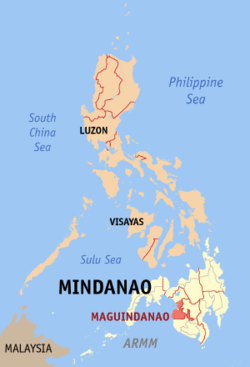
These various micro-political beliefs, or -isms, must be fully brought to light, not only so they can provide us crucial clues on—towards an understanding of—the motives and psychological forces that had been at play in the gruesome act of the Maguindanao massacre and similar killings in the months and years and decades past, but also they can lead us to ideas for taking the necessary steps in mitigating tensions, fixing quandaries, resolving conflicts, and checking the avarice, the avarice that is a clear and present danger to human existence not only in Mindanao but the rest of the country as well. That is to say, should we decide one day to do just that: try to mitigate tensions, resolve conflicts, mend wrecks, purge evil.
Now, while our country’s leaders from the elite or new elite class are still trying to decide whether they as a collective want to be on top of these mending, many ask: what could have motivated the gruesome act of that which has internationally been touted as “the single deadliest event for journalists in history”?
Sure, there has been a rain of conjectures. Layman psychology offered us the possibility of a narcotic influence in the men who, in the act of inflicting harm, probably could not avoid doing something else beyond killing the bodies screaming in front of them. This is an understandable theory, considering the many cases of similar unhindered violence and mutilation due to drug-induced psychoses. But, given that, illegal drug intake alone cannot be the main rationale for the mass murder itself, taking into consideration the near-finesse of trying to get rid of the bodies after their murder. Other reports even state that the deed had been planned days in advance. So, . . . what could have been the other possible socio-political, filial, or personal motivations, not only for the killing but for the post-murder mutilation that should presuppose deep anger?
Another offered view is the personal angle, namely, hatred for a family who may have inflicted hurt on a man or men within a chronology of painful words and insults, coursed through word of mouth or—perhaps—the local media. Although possible, qua simple accumulated hatred, this psychology behind the murderous deed would necessitate confirmation by some deep and objective research into the history of the Ampatuan-Mangudadatu families’ enmity and feud, and by deep we mean deep into the families and their confessions and stories. Did one of them call one of the sons sissy, or something like that, for example, enough for one to want to plan on when and how to slit the other’s throat?
Another angle offers jealousy as the culprit, involving a woman or women (or a man, for that matter). Why did an Ampatuan suspect display such deep hatred for the wife of a Mangudadatu as to lacerate and puncture her feminine parts even after death? But this angle, too, would require an intensive research (deeper than that for the insult angle), and immersion in the families, for it to be able to come up with a reliable documentation of stories and confessions.
Finally, there is—apart from the temporary-insanity-due-to-drugs theory—the imaginative angle that proffers a non-drug-induced insanity as a likely explanation for the killing and subsequent mutilation and abuse of the murdered bodies. While psychological testing of one or two of the suspects is possible, it is—however—hard to imagine a collective insanity operating among a hundred armed men, although it is possible the mutilator was only one of them, not all of them.
Whatever was the psychology behind the murderous act among the inflictors, my interest is really in the larger -isms that led to the act itself, by which I mean the social -isms that inspired or motivated the personal -isms or psychological defects among the involved that enabled them to do the deed.
Now, in scanning these -isms I do not seek to pinpoint one as singularly responsible, but rather would like to imply interplay between the various -isms that—inadvertently or advertently—may have supported each other.
It may be true that, as some analysts say, a balance was ruined (for instance, there is the proposition that the Macapagal-Arroyo administration may have favored the Ampatuans over the Mangudadatu clan that thus resulted in the one lording it over the other, with the other rebelling in turn). But I am less interested in the analyses of détente or mutual neutralization or the toleration of one party’s abuses or the nurture of this party’s -isms. . . . I am less interested in those specifics than with the drawing of the tree where hangs the long-standing fruits of this hierarchy of -isms functioning as a support system in the Philippine jungle we like to call Democracy.
So, instead of trying to debate with pundits on what may have triggered the moment, let me just examine the larger history and web involving the various -isms at play.
1. A country of datus
Off the bat and quite quick in coming to mind is the idea of datu-ism, or the belief that a Mindanao datu family (a Southeast Asian ethnic-Moslem form of monarchy) has the full right to the control of an area’s affairs, inclusive of its lands, its industries, its natural resources, its laws.
Now, what would be in conflict with this entrenched utopia? The obvious contest to a datu-ism would simply be one from another datu-istic entity, i.e. another datuist family, that might wish to challenge the ruling datu family’s reign, although still from within the same datu-ist belief or system rather than without.
However, such a challenge may not be that simple. Such a challenge to a datu family’s datu-ist rule, albeit from within the datu-ist system, may also in fact be a challenge to datu-ism itself in the long run. A datu-ist entity’s challenge, for instance, may be intent on seeking reforms within datu-ism, or—even better—the gradual eradication of datu-ism itself. The reasons for such a direction may be various (chief of which might be “everlasting peace” and the concept of that -ism we love to call “democracy,” along with the latter’s accompaniment, “free enterprise”).
But the datuist philosophy itself, whether confronted by a democratic challenge or not, is certainly enough farm for greed rooted in the belief. Thus, qua farm patch for the dreams of greed, it would not be hard to imagine this psychological setup as reason enough for a person (entrapped in this datuist utopia) to protect his domain and thus exact the deepest of hatreds towards those wishing to challenge the same domain and (possibly believed-to-be-divine) privilege.
Confronted with this ideology in the field, then, we are now duty-bound to ask whether, for one reason or another, we wish to allow datuism to continue to exist in Mindanao or not. And corollary to this question to our leaders is the necessary query as to whether a form of datuism in the Christian parts of the country exists also—among self-appointed Christian “datus” in certain provinces—or not, and to what extent these “datuisms” are practiced in terms of how they use violence or grave threats to achieve objectives. After all, not a few Filipinos may testify to the rampant presence of these “datus” all over the country.
2. Datuism vs. Islamism
Islamism is, of course, long reputed in this country to be easy in resorting to violence to service its mission to achieve an Islamist region, or at least momentarily to attain funds for its protracted mission to form an Islamist nation. After all, Islamism without violence would perhaps be a contradiction in terms if jihad is a requisite to achieving a necessary Islamization. As a religious crusade, therefore, Islamism’s recourse to violence or armed struggle is not surprising but self-explanatory, in the same way that it is not surprising to see unorganized armies of the American conservative right (consisting of fundamentalist Christians known to their liberal friends as Christo-fascists) every so often finding it righteous to inflict bodily harm on such American social enemies as abortionists, gays, feminists, and blacks.
But Islamism is a controversial term, and some personalities described as Islamists shirk from the tag due to its associations with violence and terrorism. We are using the term here to refer to the belief among certain Moslems that there can be no ideal separation of church and state in a territory, given that its ideal is the very opposing concept—that is, the marriage of Islamic and state laws within a claimed territory or geographical unit. Corollary to this idealization is Islamization through jihad or any other form of forcing the issue.
Though datuism may be mainly Moslem-based in Mindanao, in the same way that monarchies in the Mideast are Moslem, Islamism is an enemy of datuism, and vice versa. This is so because although the religion of datus is often Islam, datus are not necessarily devout Moslems but may only be using religion as an alibi to promote certain personal or filial interests, in the same manner that some Christian sects pretend to be followers of the landless nomad Jesus of Nazareth to be able to dupe their followers into donating a hefty percentage of their real estate sales to their church.
There are proposals of analysis to the effect that Nur Misuari’s renewed rebellion after his Autonomous Region of Muslim Mindanao (ARMM) leadership stint was precisely due to a Macapagal-Arroyo-sponsored return to datuism within such territories as Maguindanao. If that is true and correct, then Misuari’s neo-rebellion can be deemed justified (or at least understood), since by that Arroyoan sponsorship the ARMM rationale would have to be redefined from being for an autonomous Islamist region to being for an autonomous Moslem datuist region or compendium of datuist regions.
3. Federalist warlordism
But, of course, that picture proposing a conflict between two interests among the Moslem Mindanao elite may be too simple. For interwoven into the complex thread is a national patronage system that has its own complex of -isms. Part of the complexity of political relationships and affiliations is the patronage system involving the electoral process, among other processes, corrupt and/or not.
We have, of course, heard of the federal system. Now, while the Philippines
In the federalized system of electoral processing, a set of national leaders is supposed to be patrons of a set of local leaders, Mindanao datus or Visayan or Iloco or Bicol warlords though they may be. Those in the latter level return the patronage promise to deliver votes through thorough and perfectly legal campaigning and/or through extra-legal means (threats or even assassinations should it be necessary).
In this type of “democratic process,” votes (numbers) become more important than voters (people), and thus would perfectly regard warlordism as an ideal if not a necessity. In this social system, therefore, it is normal to hear reports of canvassers, teachers, watchers, campaigners, or even journalists disappearing, or at least being threatened with the disappearance of either their own persons or their families’.
This -ism in Philippine society is a classic and has long entrenched superior clans and dynasties in many parts of the country and practically promoted (consciously or subconsciously) violence as the rule more than the exception—although as much as possible delivered discreetly, away from an unwavering journalistic glare. Again, these local warlords are made possible not by themselves alone but through a Philippine type of warlordic federalism. It may be worth noting that the federal or central regard for a journalist, for instance a reporter covering a Department of Agriculture national fertilizer-fund scam, is usually seen as the inspiration or model for the regard for a local journalist, say, for instance, a Leyte broadcaster who mentioned someone’s illegal logging of native forests in Samar that could inundate towns with floods.
But despite the assassination of journalists, this federalist warlordism can also be considered as one of the systemic reasons why the Philippine archipelago has continued to remain a nation, or as one country, instead of as several island-nations governed by different warlords. In fact, a warlord from Isabela can even borrow space in Samar for a certain period of time while his logging concession lasts. Datus and warlords can be friends, in the same way that intra-royal marriages were resorted to in Europe from the period of Ancient Antiquity to Early Modern Europe in order to maintain the peace.
But despite the assassination of journalists, this federalist warlordism can also be considered as one of the systemic reasons why the Philippine archipelago has continued to remain a nation, or as one country, instead of as several island-nations governed by different warlords. In fact, a warlord from Isabela can even borrow space in Samar for a certain period of time while his logging concession lasts. Datus and warlords can be friends, in the same way that intra-royal marriages were resorted to in Europe from the period of Ancient Antiquity to Early Modern Europe in order to maintain the peace.
4. International Capitalism
But federalized warlordism is not possible without goods dangled by a national or federal center. And that federal center, though reliant on goods from its local entities, is much more reliant on goodies from abroad.
These international goodies may take the form of weapons aid from a certain country or certain countries, delivered in the name of keeping in check two external -isms that dream of entering the territories of the status quo—Islamism and/or communism.
These internationally-derived goodies may also take the form of loan packages for projects that make sense (farm-to-market roads) to projects that don’t (an auditorium at a far edge of a city), the rationales for which are either contractor- or supplier-determined (instead of need-determined) or otherwise season-determined (say, the election season). In the first rationale, the benefits to the local warlord (or simple, mild-mannered politician with secret kidnap-and-torture goons) is in terms of hefty commissions. In the latter rationale, the benefit is either for commissions or electoral image-building or—at best—both.
In return for the international loan package from abroad, both national/federal warlordism (with borrowed elements from the Armed Forces of the Philippines as their own private warriors) and local warlordism (with Civilian Volunteer Organizations [CVOs] for warrior units) may then deliver to the national/federal level the very reason why the loans were approved in the first place: natural resources for international capitalism.
But notice that warlordism cannot be content with police for warriors, demanding CVOs with high-powered ammunition. The reason for this discontent with a simple police force is simple. A contest often does not derive from mere citizens or journalists, who are usually puny targets for easily contrived “accidents,” and which police can take care of. The enemy may be real competitors who are aware of the natural resources at play, whether these be oil in Sulu or nickel in Palawan or silicon in Maguindanao (totally beyond the meager value of the province’s plywood industry that’s not really worth killing journalists and other datuists for).
In Mindanao , these contesting groups would include the Islamists and the Davao-provinces-based communists who consider each other Mindanao’s anti-foreigner liberationists.
5. The corollary alibi
Yes, apart from the conspicuous Islamists are the obscure Mindanaoene Communists.
But, you know, the Islamists and the communists are really part of the overall equation. While their presence provides voices of resistance against international corporate expansionism, it also presents a rationale for the perpetuation of militarist arrangements that in turn feed on datuisms and federalized warlordism.
@ @ @
So what is left to the general populace?
The general populace has its journalists who, though necessarily operating from within a corporate setup, are required by the competition of the journalism trade to be non-partisan, objective, or freedom-conscious. Unfortunately the -ism of journalism runs counter to the tenets of datuism, federalized warlordism, and international corporate expansionism. Thus it often finds itself an easy and juicy target for the Philippine sport of truth assassination.
Now, speaking of truths or truisms, there are also the citizens themselves, led sometimes by civil society groups or NGOs. The NGOs, whose purposes in life are to solicit funding for a project they can think of, projects that range from digging safe drinking-water wells for rural barangays to supplying villages with solar-powered generators for an environment-friendly future, also may have well-meaning civil society directions that could be in conflict with the interests of datuism and federalized warlordism and international corporate expansionism: for instance, certain mercury droplets coming from an international corporate expansionist mining exploration with toxic substances killing fishes in an NGO-funded local fishpond livelihood project would lead to a ripe situation for a conflict. The government can only be expected to side with the international corporate expansionist, for the obvious reason that it has to maintain the everybody-happy status quo of the Philippine social -isms equation.
Now, given these conflicts with the interests of the eternal Philippine triangle involving the local warlordist and the federal warlordist and the international expansionist, it is also no surprise to find the local NGO and journalism trade threatened by the unforgiving hatred of the triangle, mostly involving people who don’t like to be disturbed by truth problems while they’re enjoying their 18-hole golf game fantasies, complete with fantastic piña coladas in a dreamy afternoon mist.
Would they think twice about killing people in the name of their utopia?
Hell, in the Philippine social -ism we love to call Democracy, voters are important, yes. But they’re no more important than the votes. [END]
Subscribe to:
Posts (Atom)